



Why Motorsport Teams Use RFID for Parts Tracking
Every second counts in motorsport, and that urgency extends beyond the track to the workshop. Racing teams manage thousands of precision-engineered parts including brake discs, suspension components, carbon fiber body panels, engine internals, and electronic control units. Each part has a limited service life, strict specification requirements, and a need for complete traceability from receipt through installation to post-race inspection.
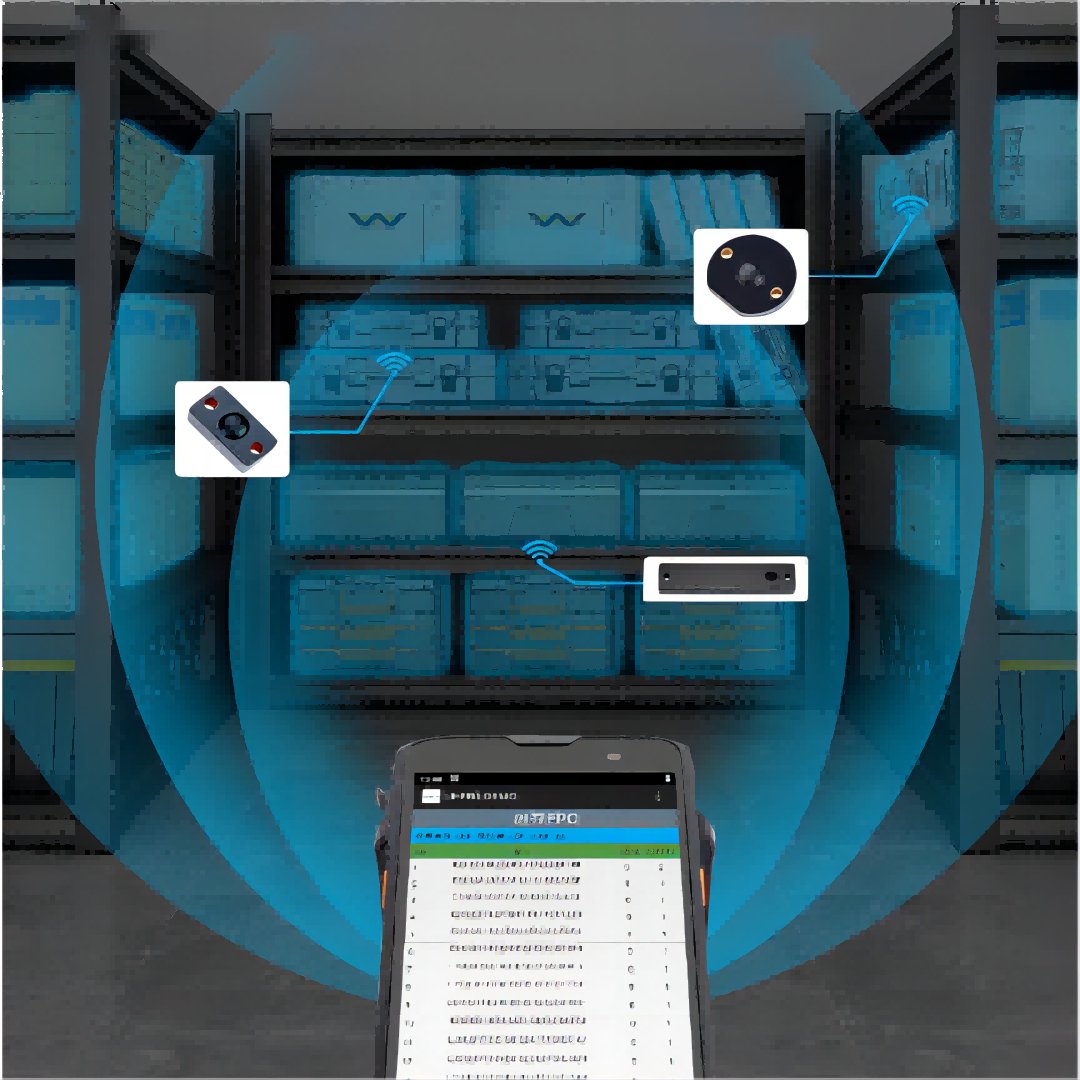
UHF RFID tracking allows motorsport teams to scan entire inventories of parts in seconds, verify that the correct specification components are loaded for each race weekend, and log usage history automatically. A single handheld reader can identify every tagged component on a pit cart or in a parts rack without unpacking or visually inspecting each piece.
The Challenge: Extreme Conditions in Racing Environments
Motorsport environments push equipment to its limits, and RFID tags mounted on racing car components face conditions that would destroy standard labels:
- High temperatures: Engine bay components can exceed 200 degrees C during operation. Brake discs glow red-hot after hard braking sessions.
- Carbon fiber surfaces: Some composite materials contain conductive elements that interfere with RFID signals, requiring careful tag selection.
- Metal components: Gearbox housings, wheel nuts, brake calipers, and chassis parts are metal, which blocks standard RFID tag signals.
- Vibration and mechanical stress: Tags must withstand the high-frequency vibrations and g-forces experienced during racing.
- Chemical exposure: Brake dust, hydraulic fluid, and cleaning solvents regularly contact tags on suspension and brake components.
Which RFID Tags Withstand Motorsport Conditions
Heat-Resistant Tags for Carbon Fiber and Exhaust Components
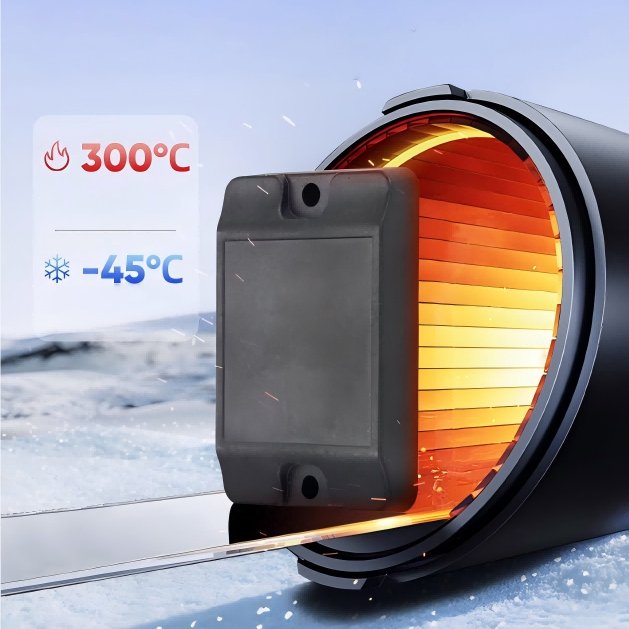
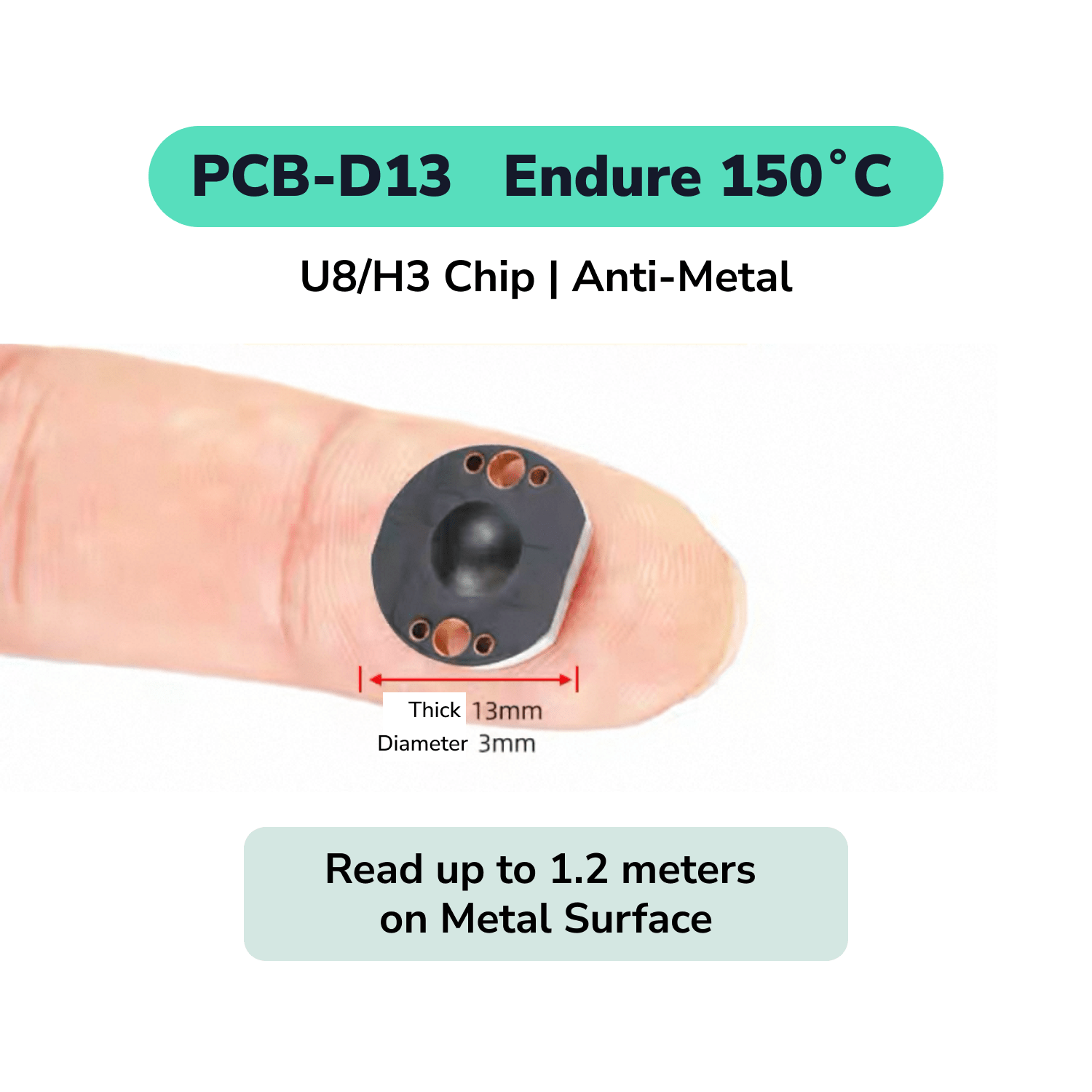
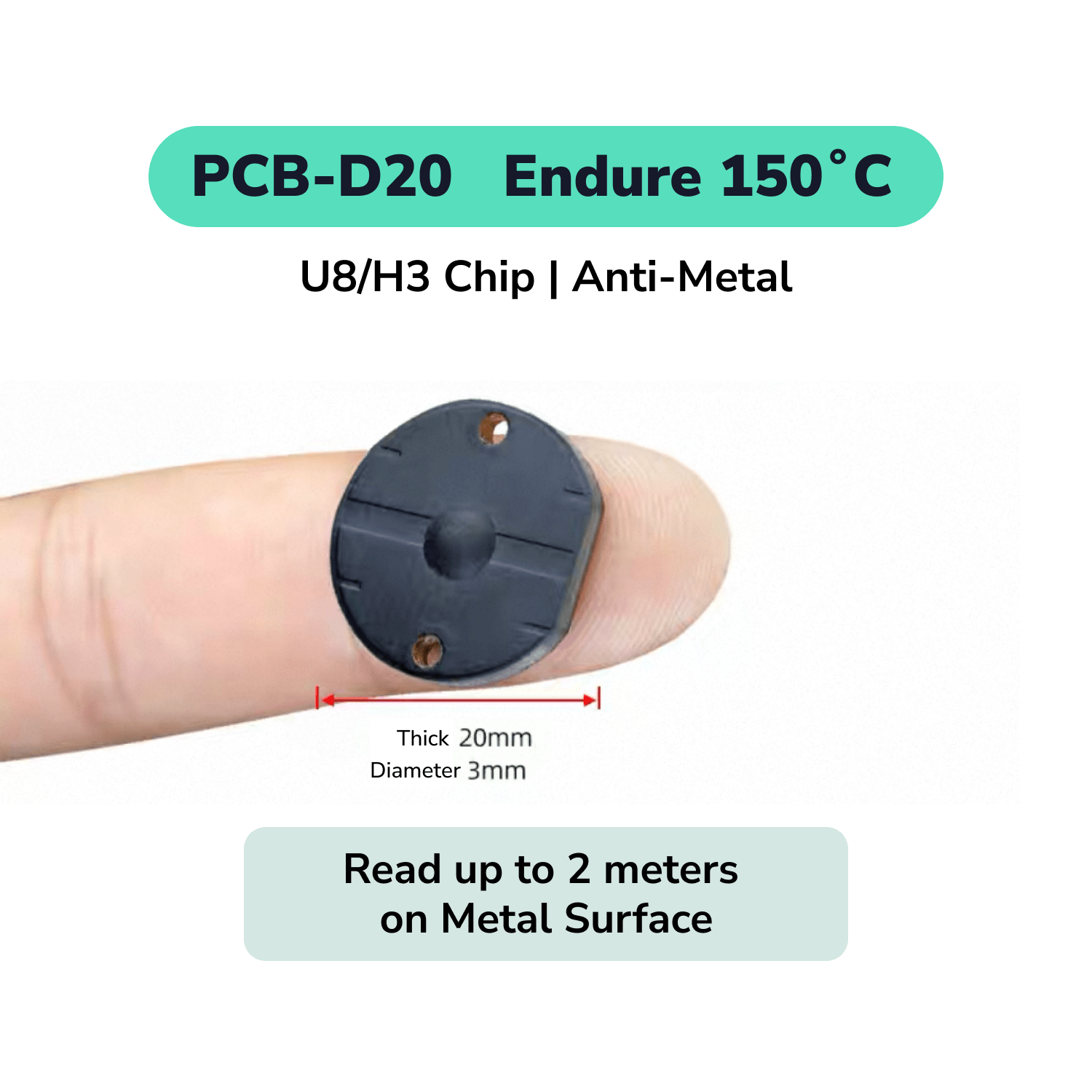
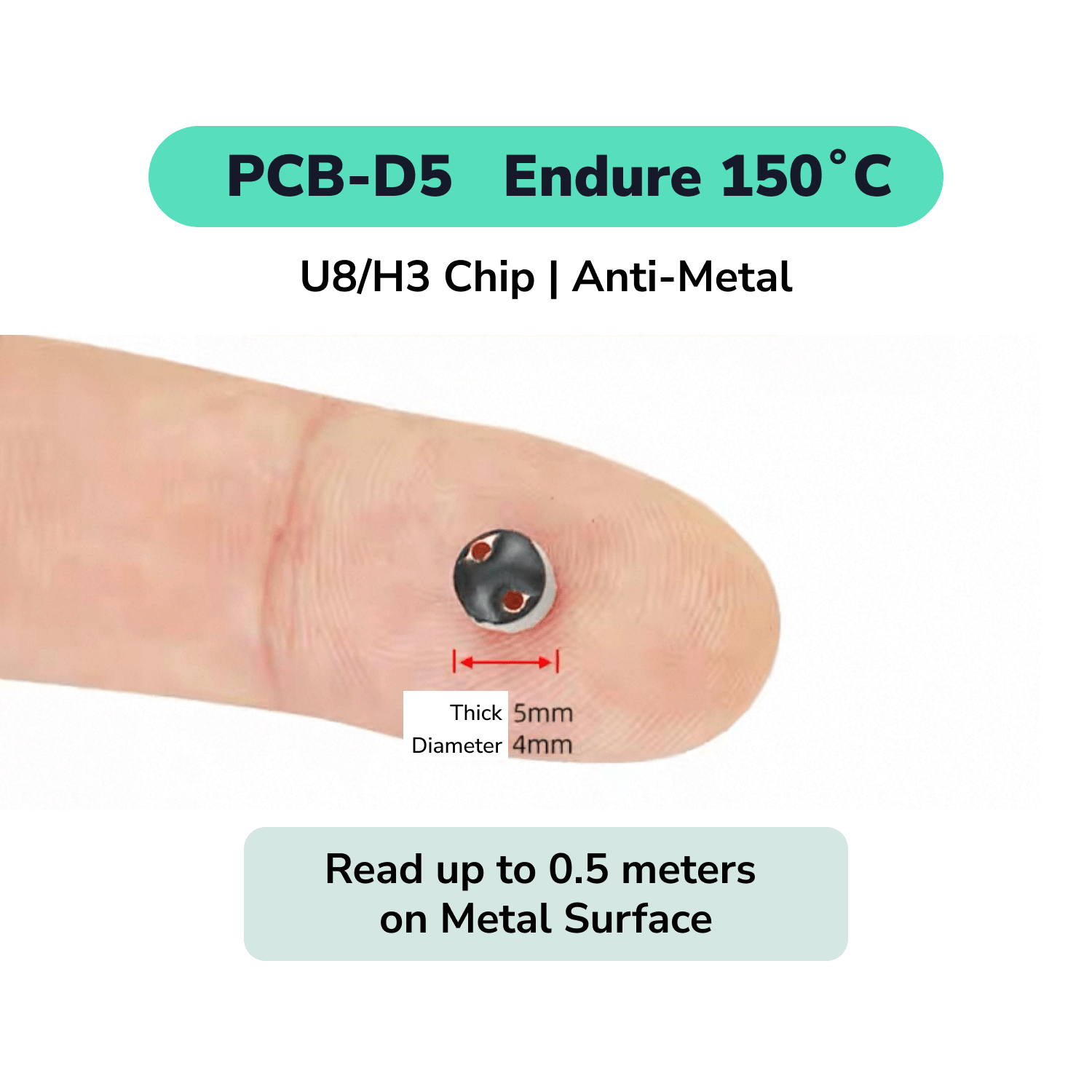
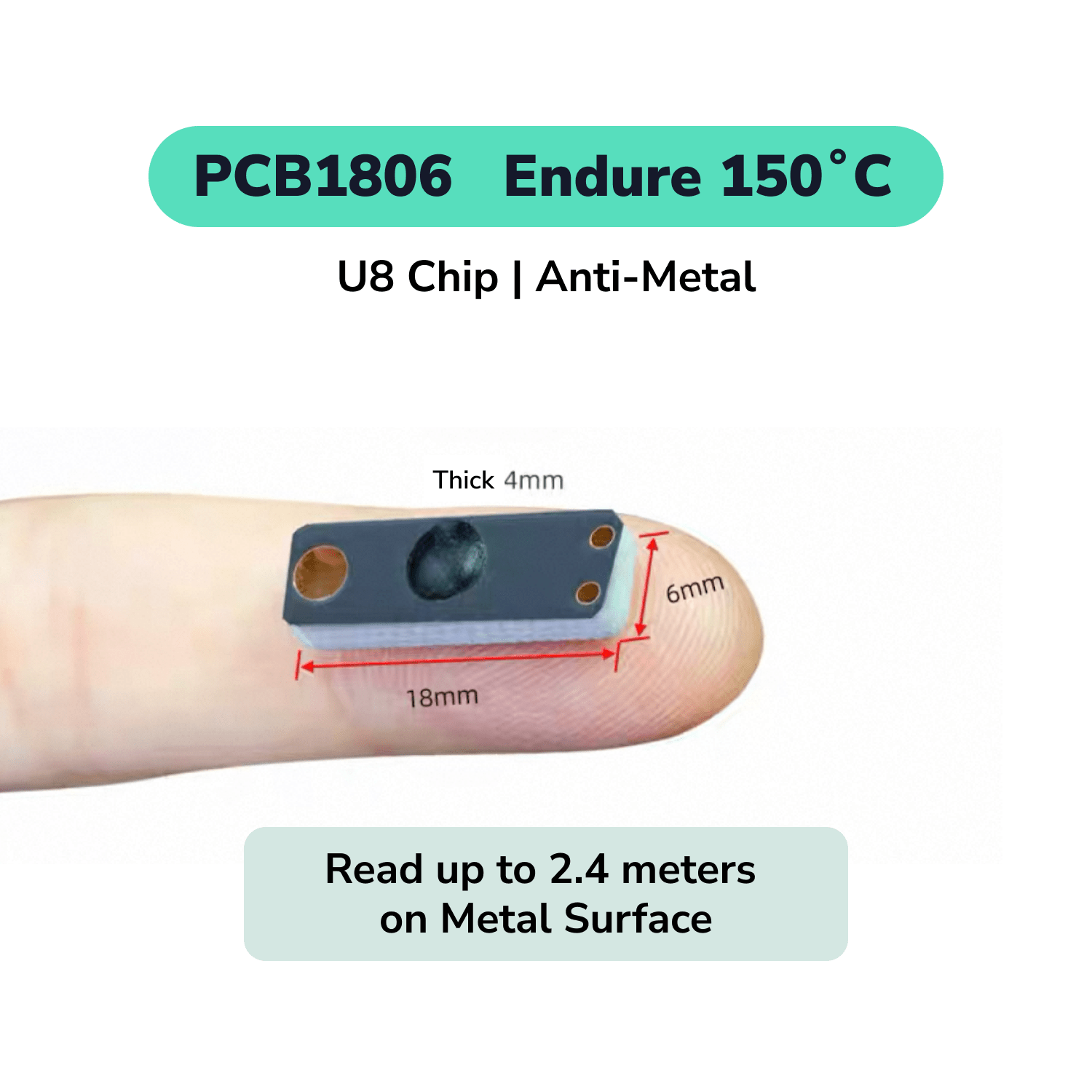
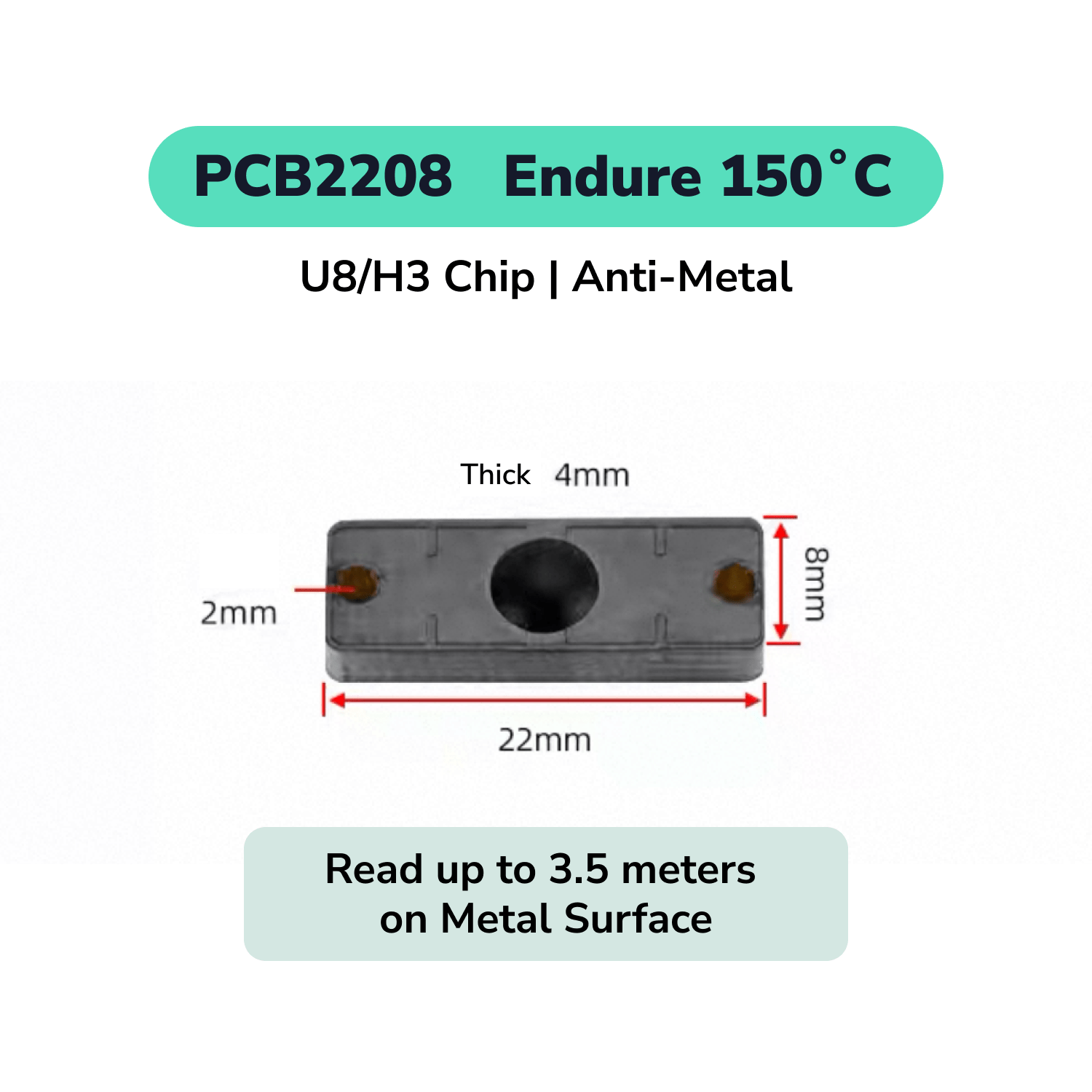
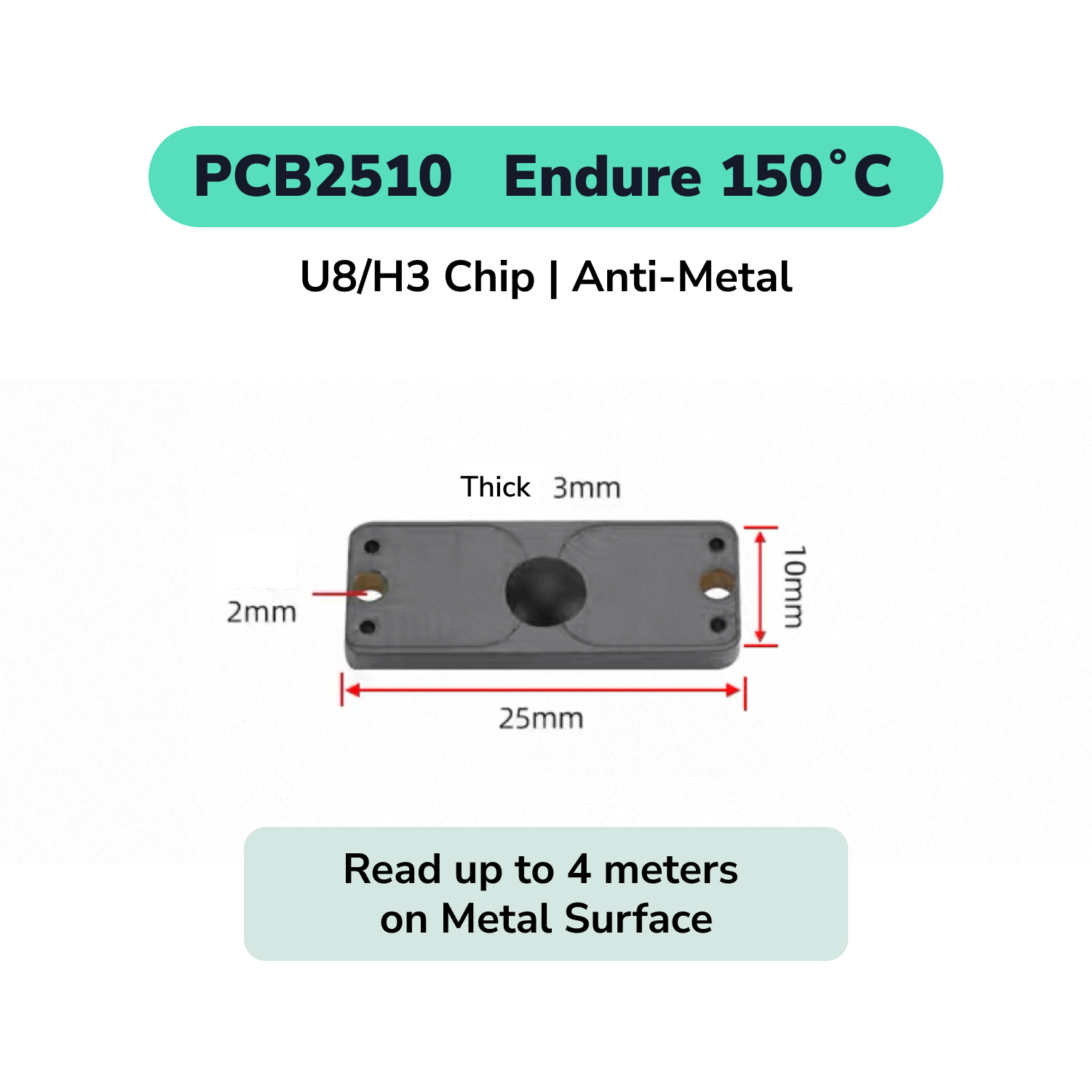
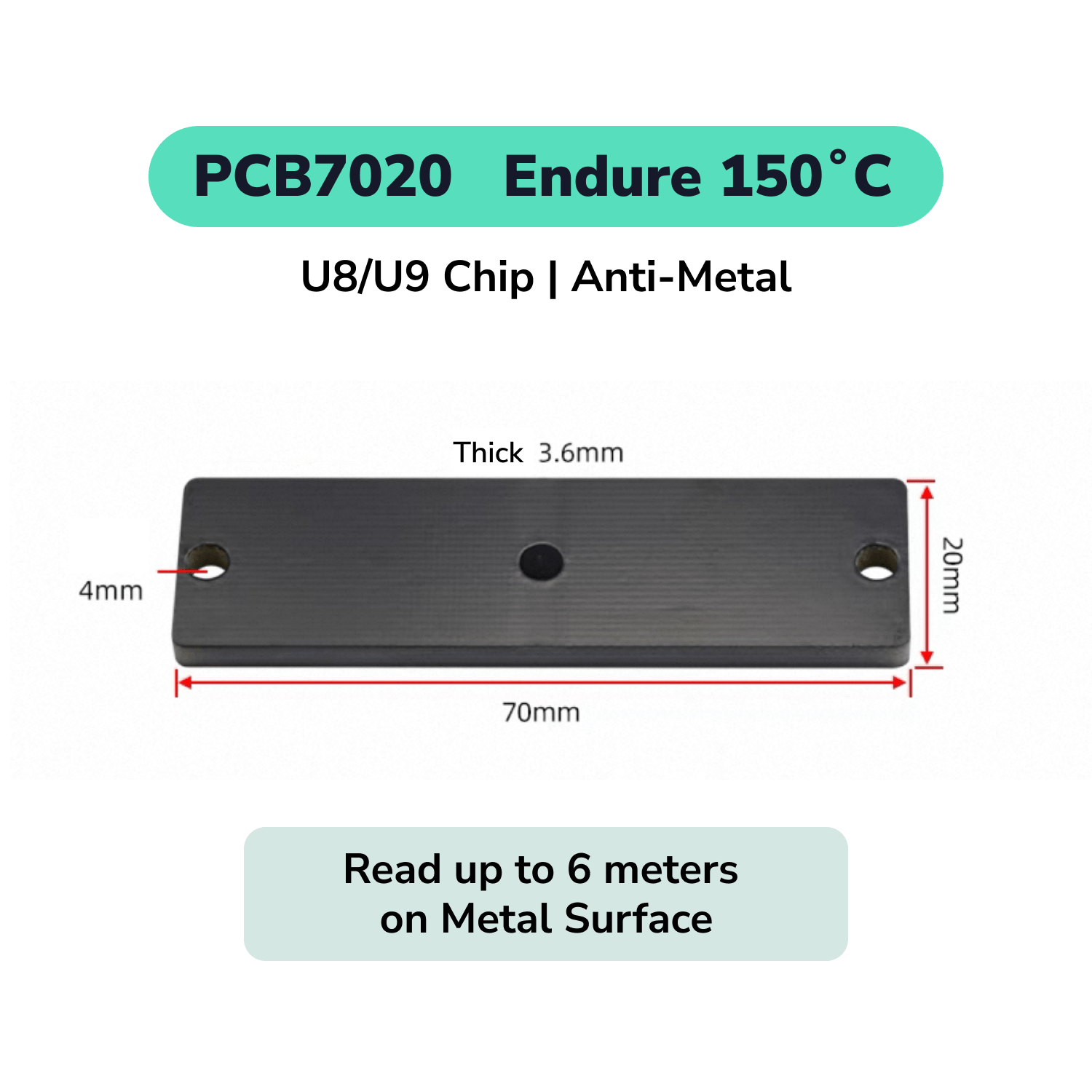
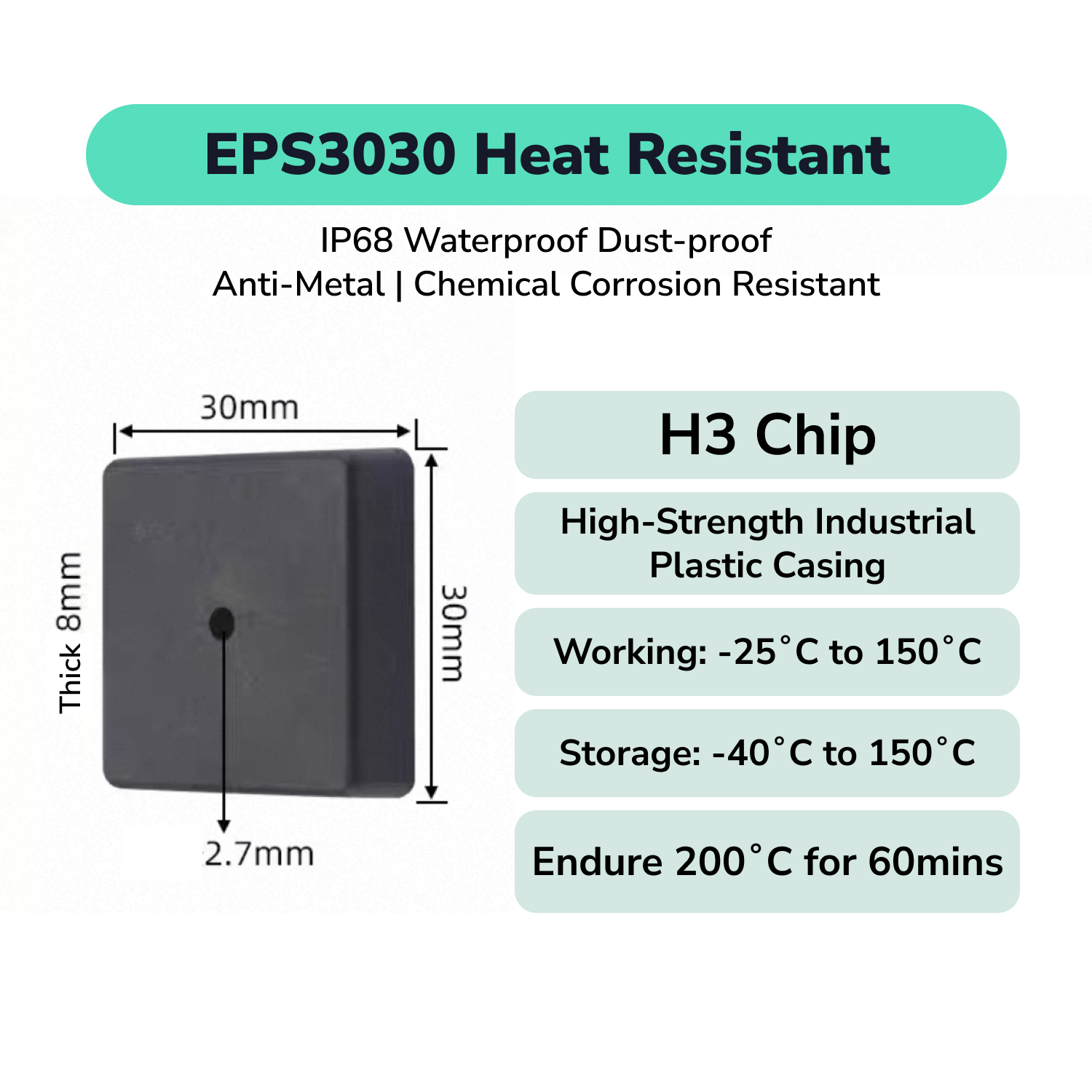
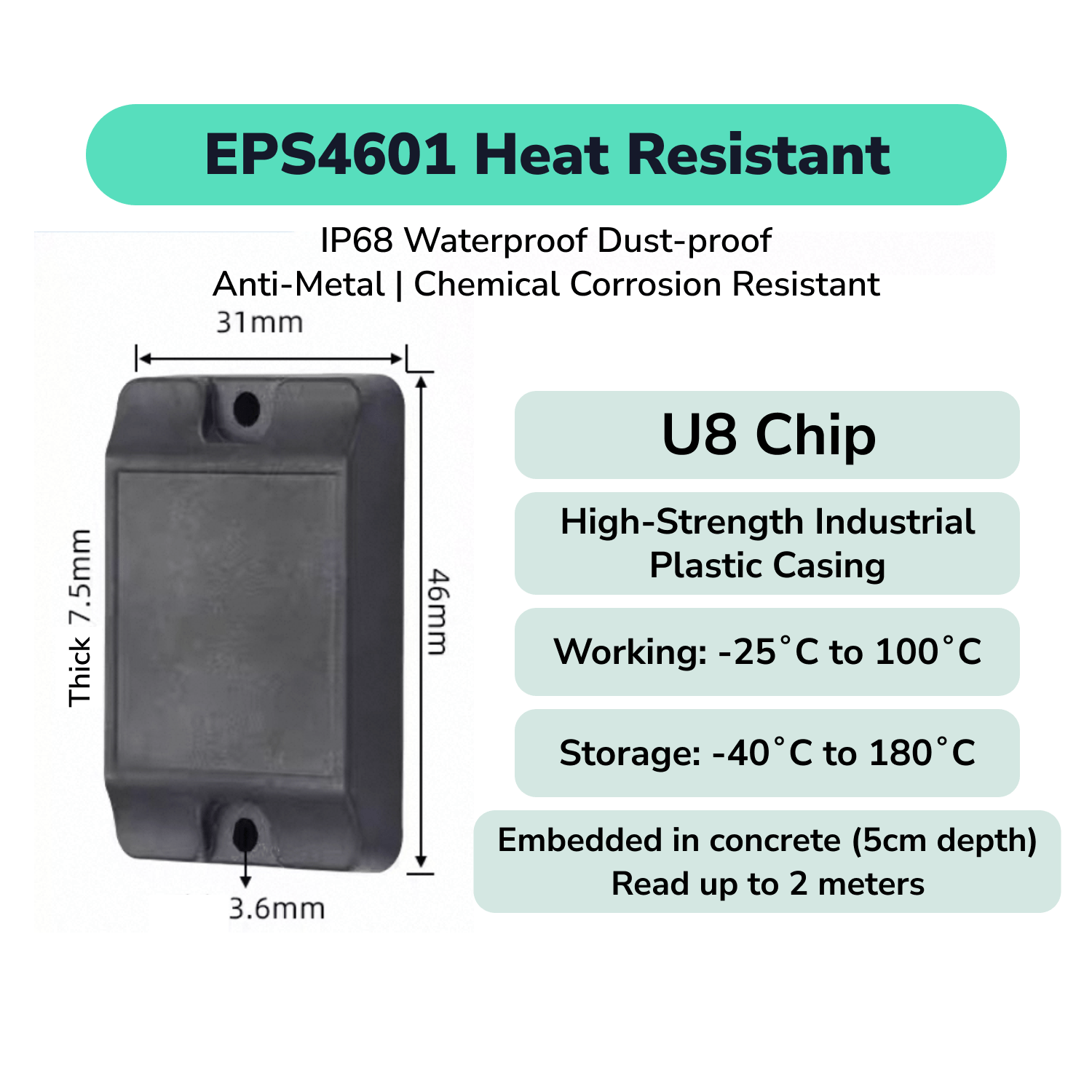
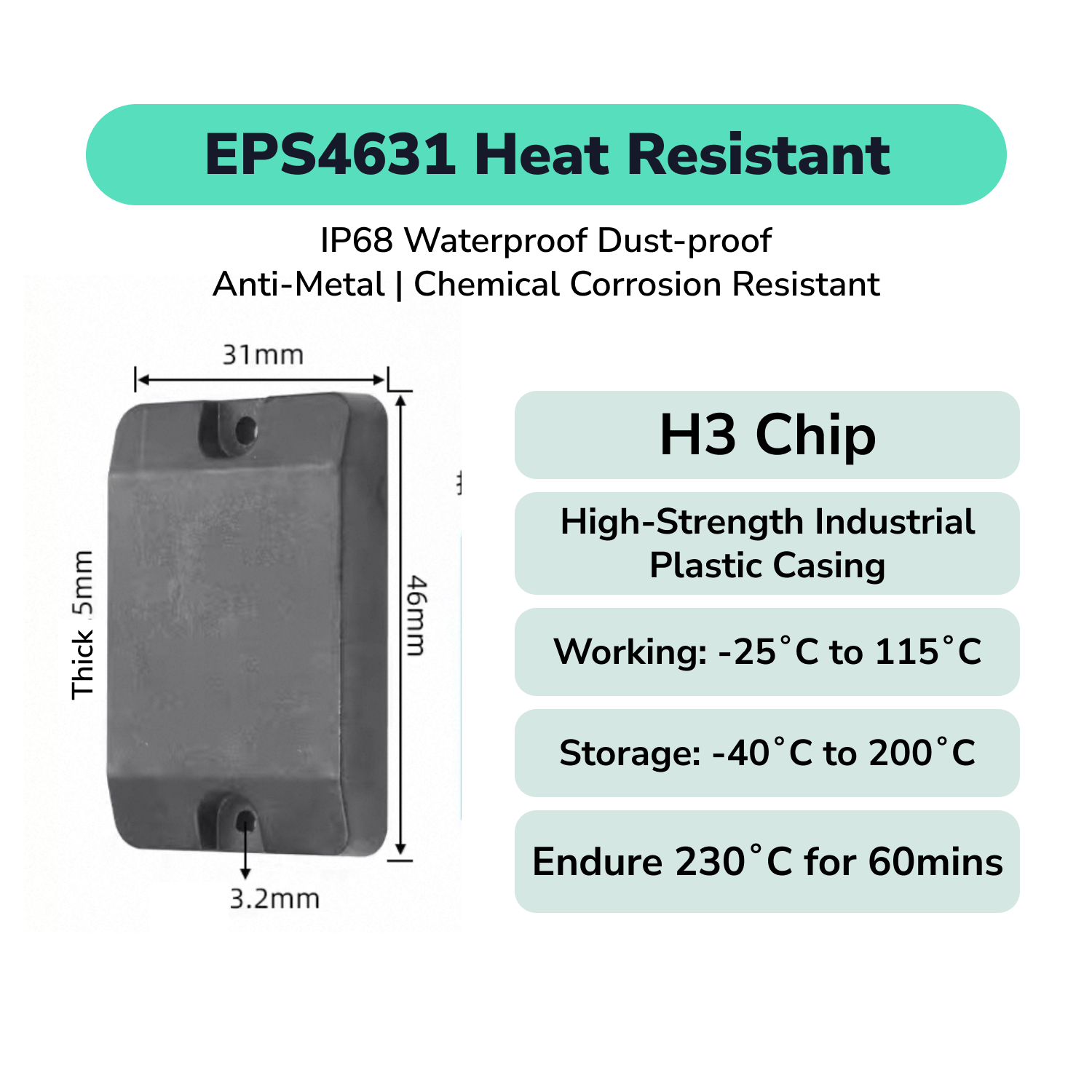
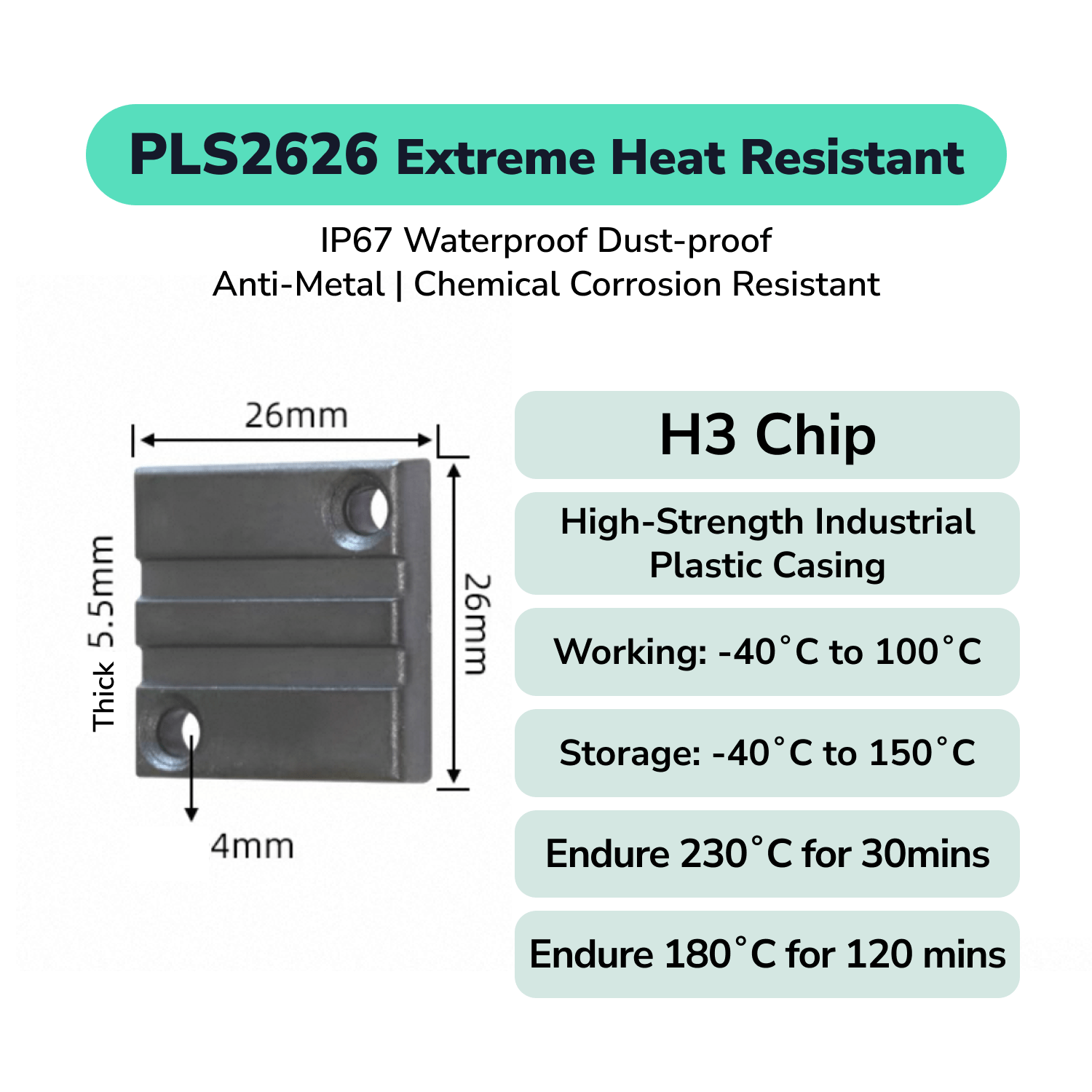
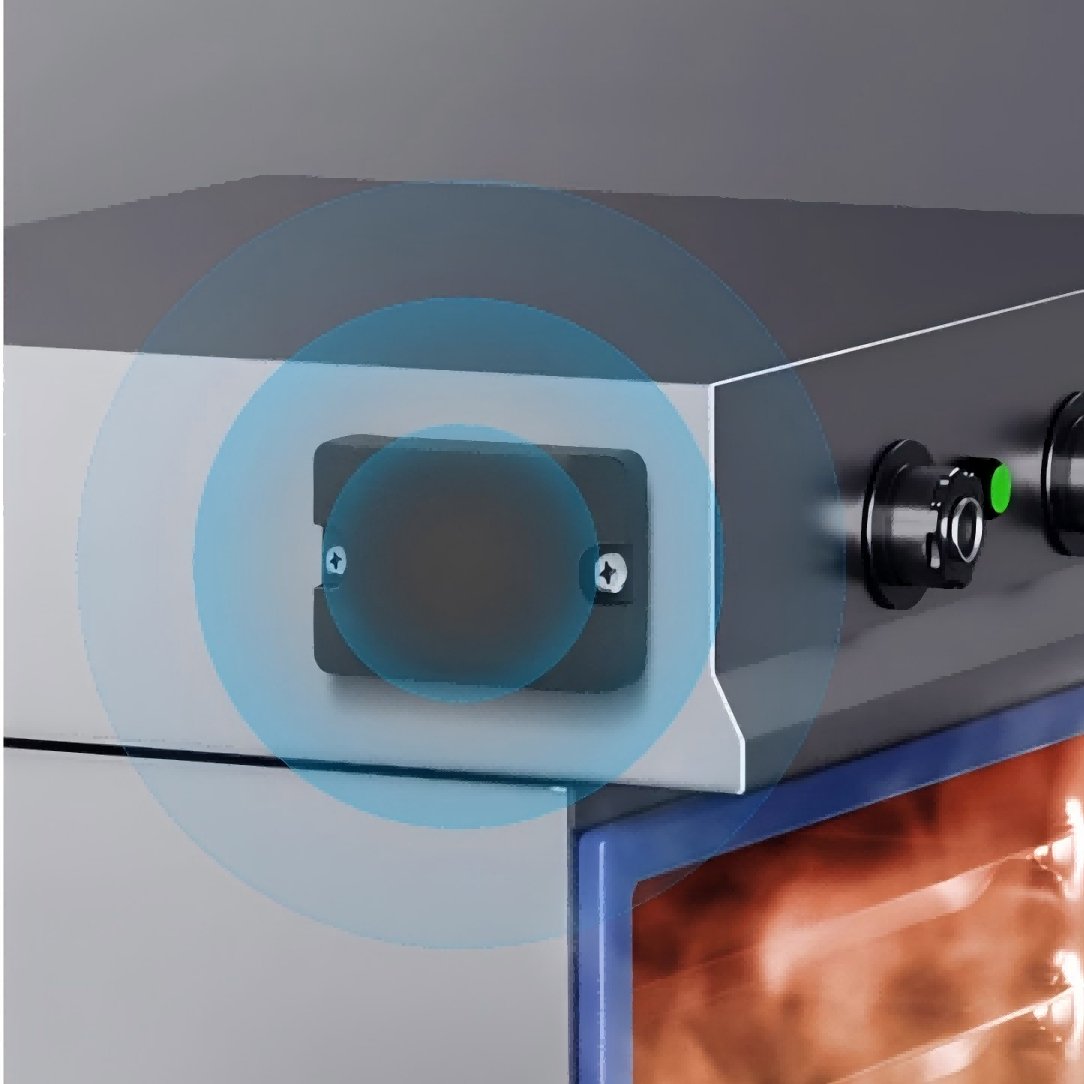
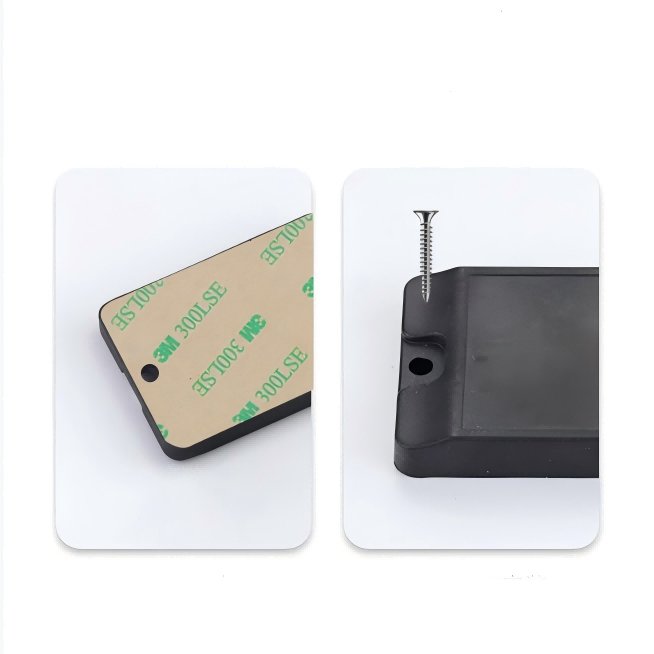
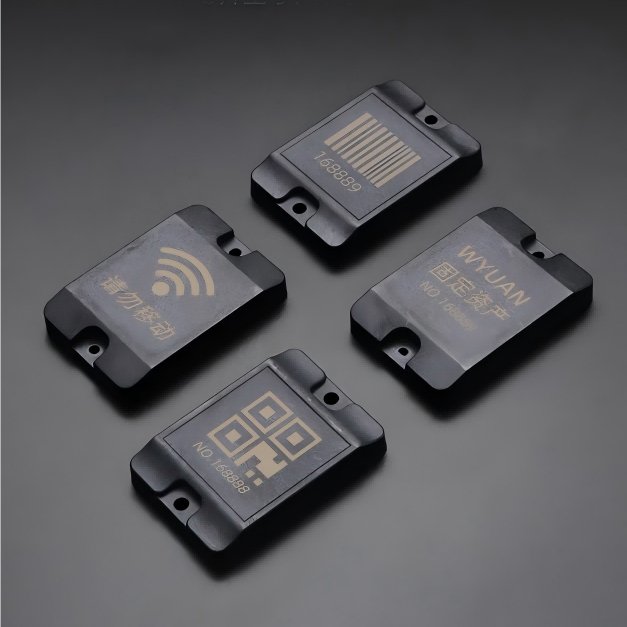
The PCB Heat Resistant UHF RFID Tag is the only passive UHF tag capable of surviving the extreme temperatures found in motorsport. Built with PCB and EPS construction, it operates from -45 degrees C to 300 degrees C, covering everything from cryogenic tire storage to post-race brake disc temperatures. It includes both screw-mount and adhesive attachment options, making it suitable for exhaust heat shields, turbo housings, and carbon fiber panels near high-temperature zones.
This tag is essential for tracking components that standard RFID tags simply cannot survive on. Motorsport teams attach them to exhaust manifolds, heat shields, brake duct assemblies, and any composite part located near heat sources.
On-Metal Tags for Chassis and Engine Parts
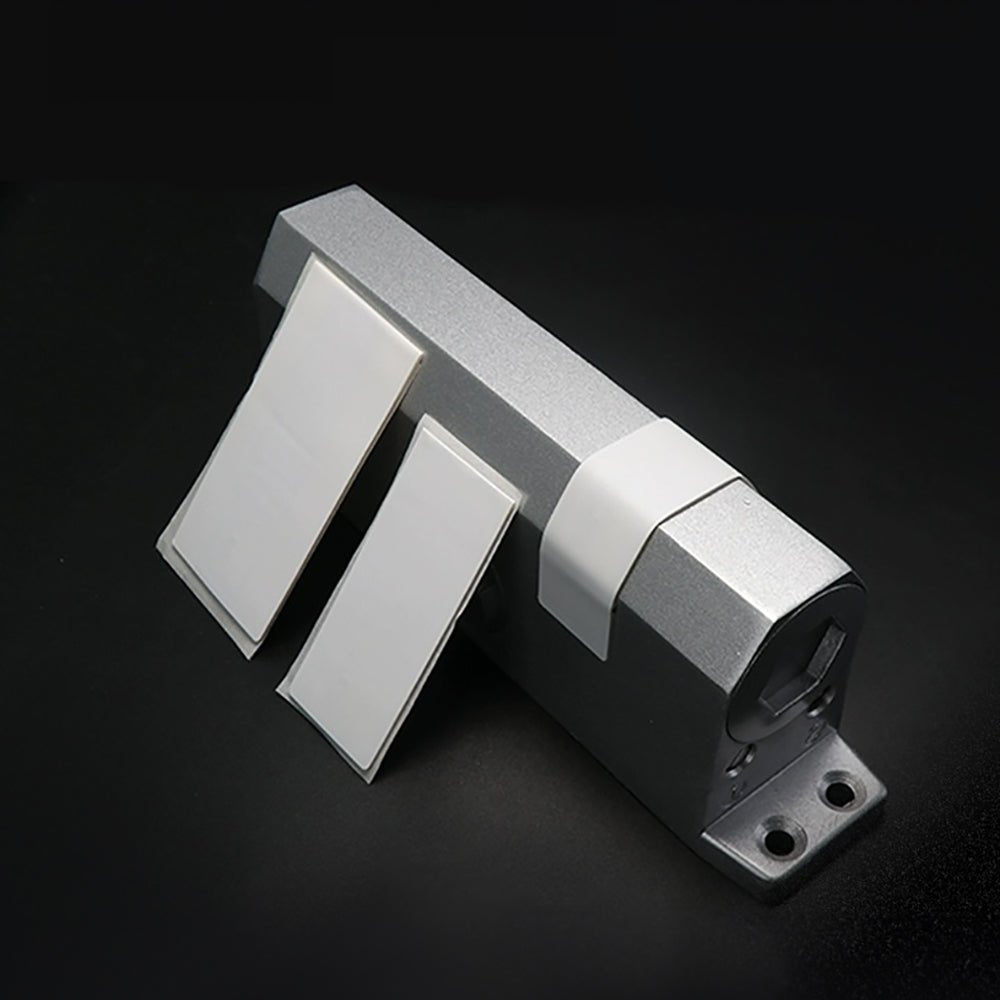
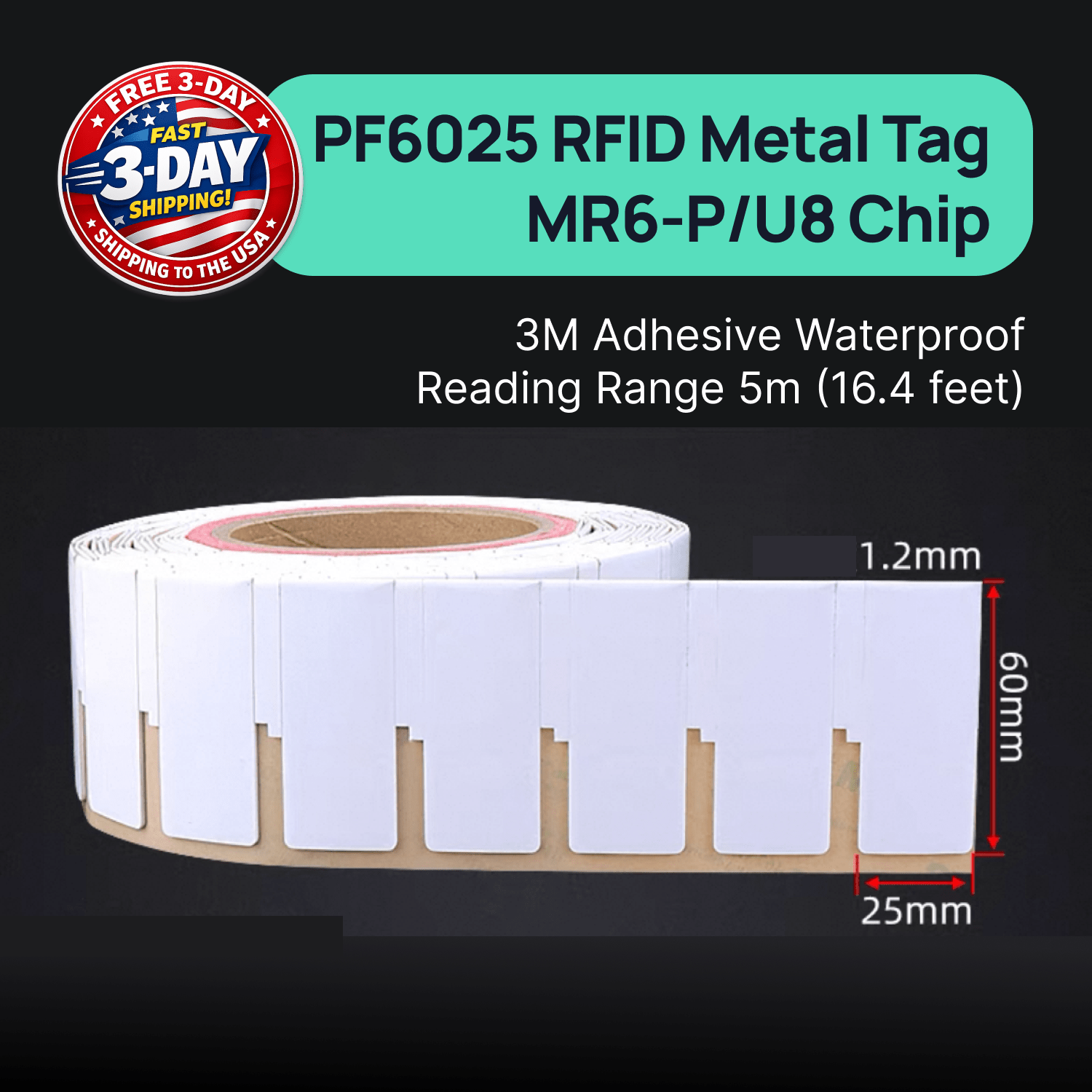
The PF6025 On Metal tag maintains a 12-meter read range even when mounted directly on steel or aluminum surfaces, thanks to its internal ferrite spacer layer. With 3M adhesive backing, it attaches to gearbox casings, wheel uprights, brake calipers, and engine block components in seconds. The thin 1.2mm profile keeps it from interfering with tight component clearances.
For larger metal components that face more mechanical stress, the P102 ABS Mount on Metal tag provides a rugged ABS and polycarbonate housing with screw or bolt mounting options for permanent installation on chassis frames and engine stands.
Compact Tags for Sensors and Electronics
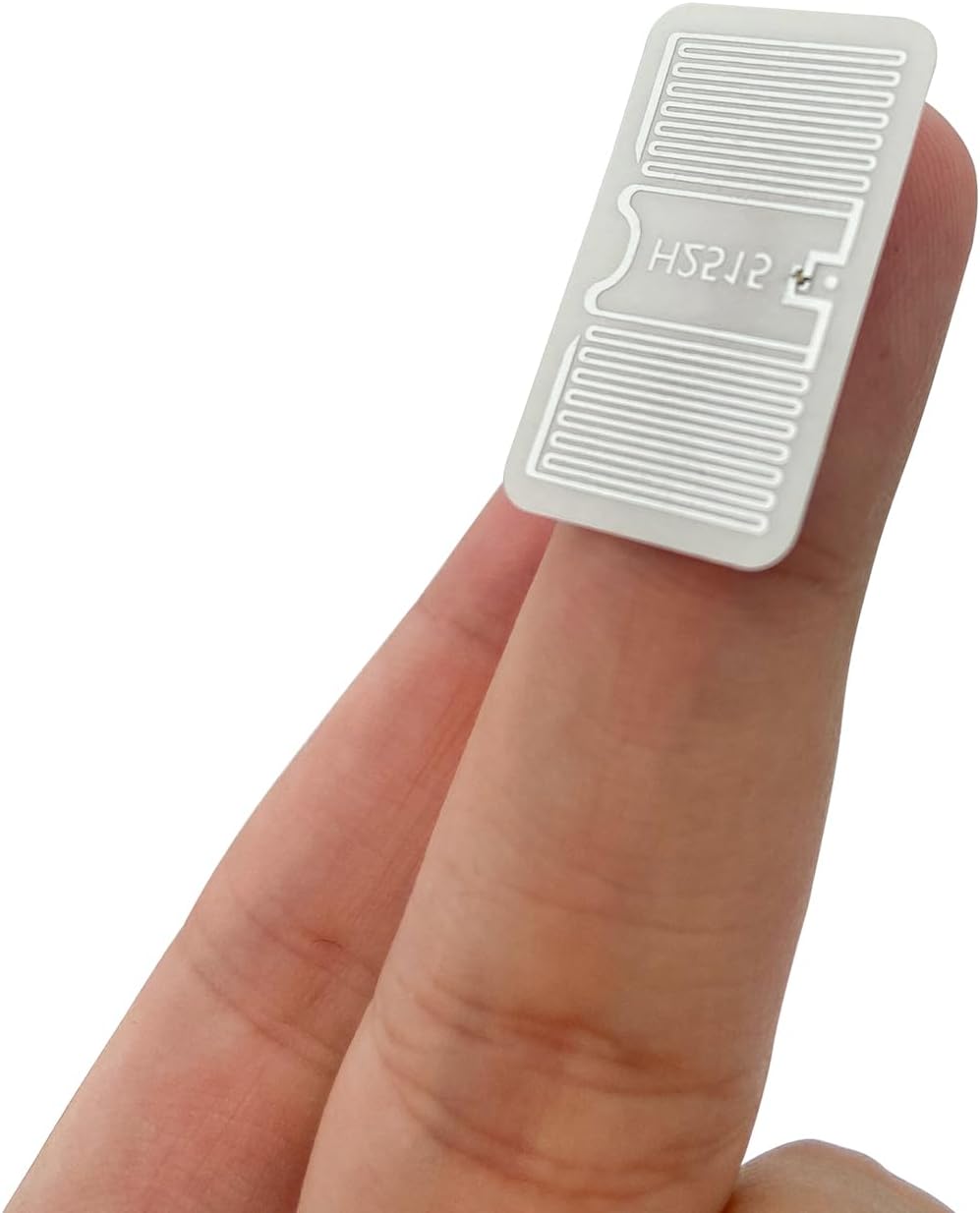
The Ultra Small UHF RFID Tag fits on the tight spaces of racing car electronics: ECU modules, wiring harnesses, telemetry sensors, and data acquisition units. Its flexible adhesive backing conforms to curved surfaces common in the packed interior of a race car. Despite its minimal size, it communicates on the standard 860-960 MHz UHF frequency and is readable from several meters.
Weatherproof Tags for Pit Lane and Outdoor Storage
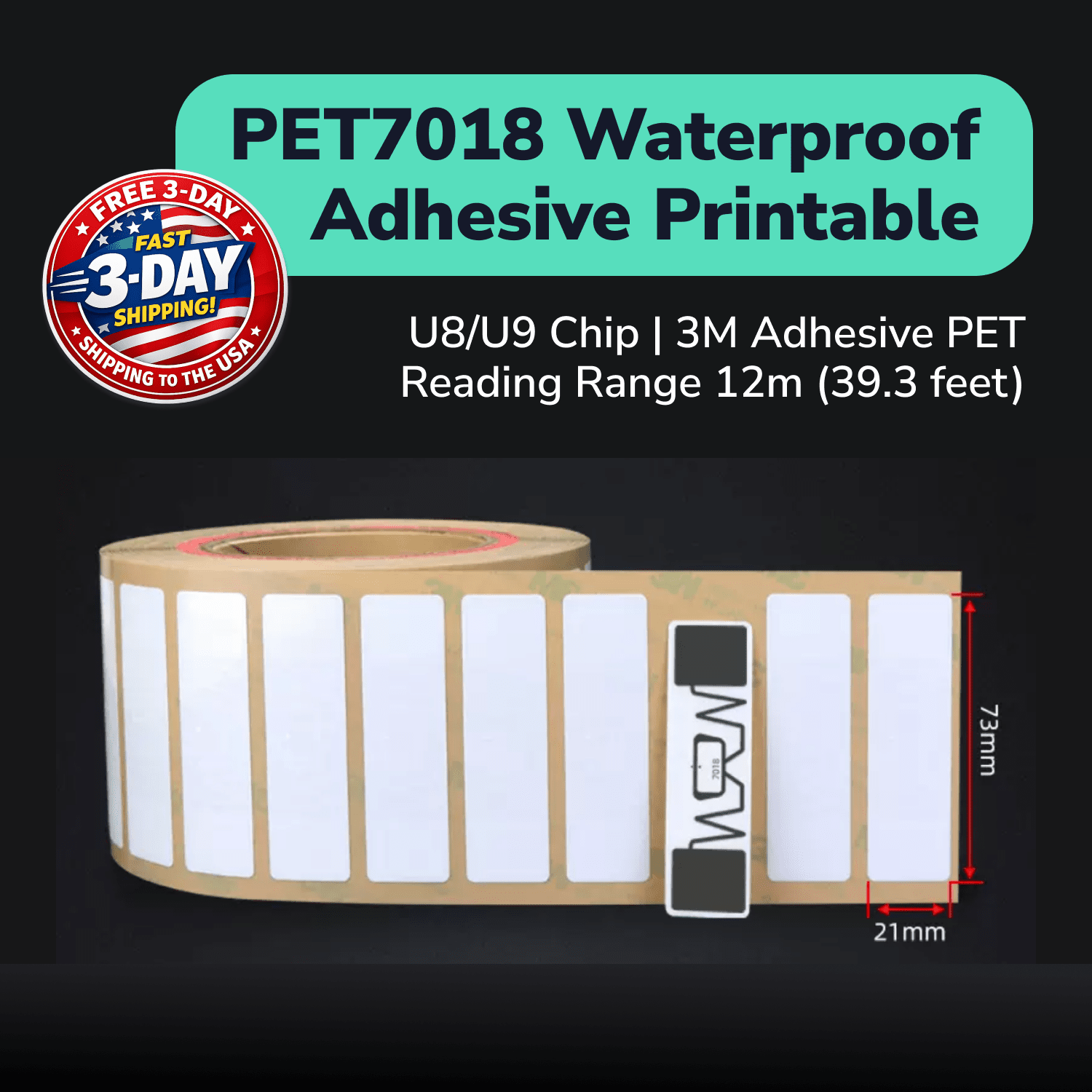
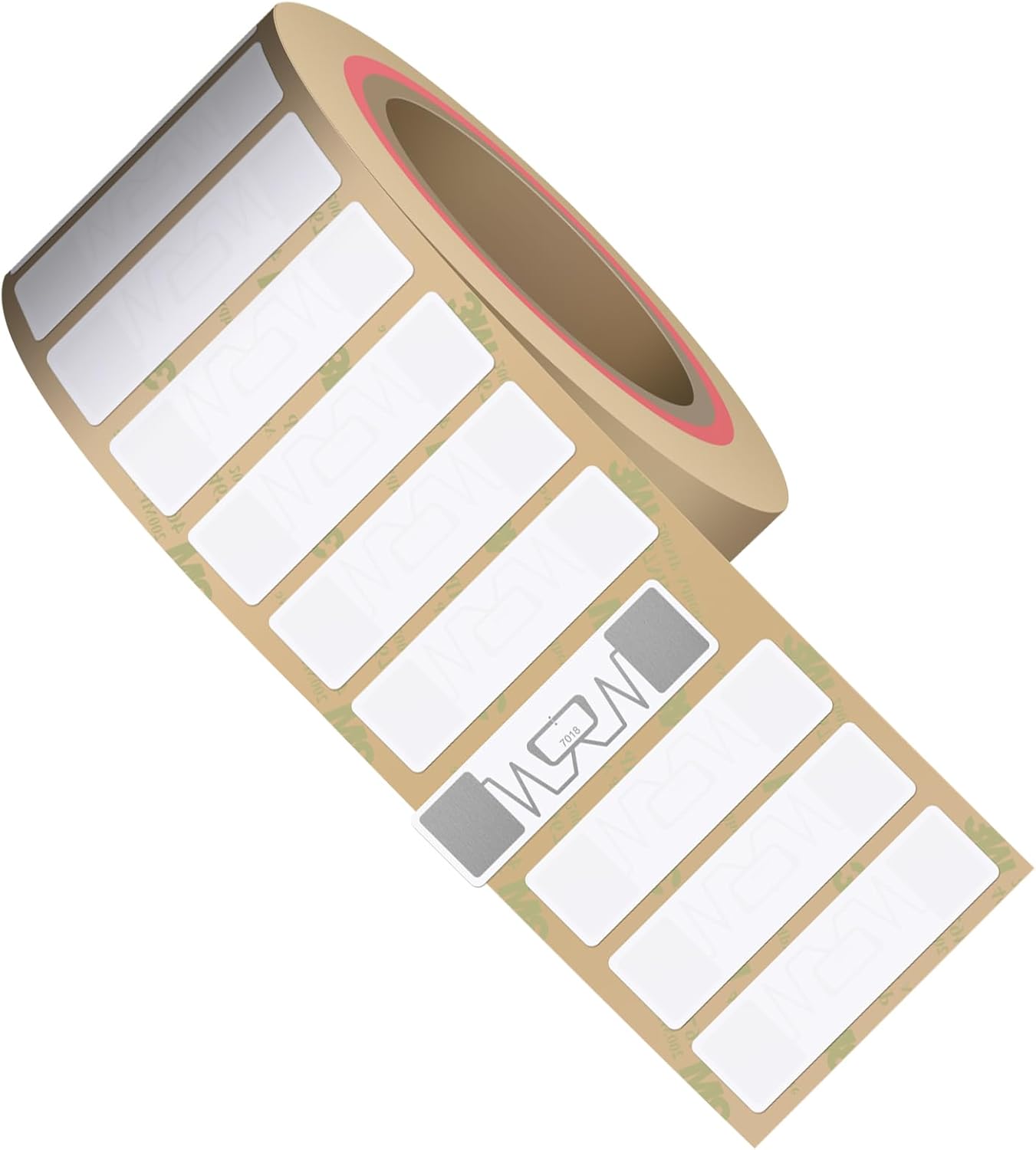
The PET7018 Waterproof PET tag handles the outdoor conditions of pit lane, transporters, and open-air storage. Sealed in waterproof PET material with 3M adhesive, it operates in temperatures from -20 degrees C to 60 degrees C and withstands rain, humidity, and UV exposure. Teams use it on pit equipment, transport containers, and outdoor parts racks.
RFID Product Comparison for Motorsport
| Tag | Temp Range | Read Range | Key Feature | Best Motorsport Use Case |
|---|---|---|---|---|
| PCB Heat Resistant | -45 to 300 degrees C | Varies | Extreme heat tolerance, anti-metal | Exhaust parts, heat shields, composites near heat |
| PF6025 On Metal | Standard range | 12 meters | Anti-metal, thin 1.2mm profile | Chassis parts, wheel nuts, gearbox |
| P102 ABS Mount on Metal | Standard range | Varies | Impact-resistant, screw/strap mount | Engine stands, chassis frames, transport fixtures |
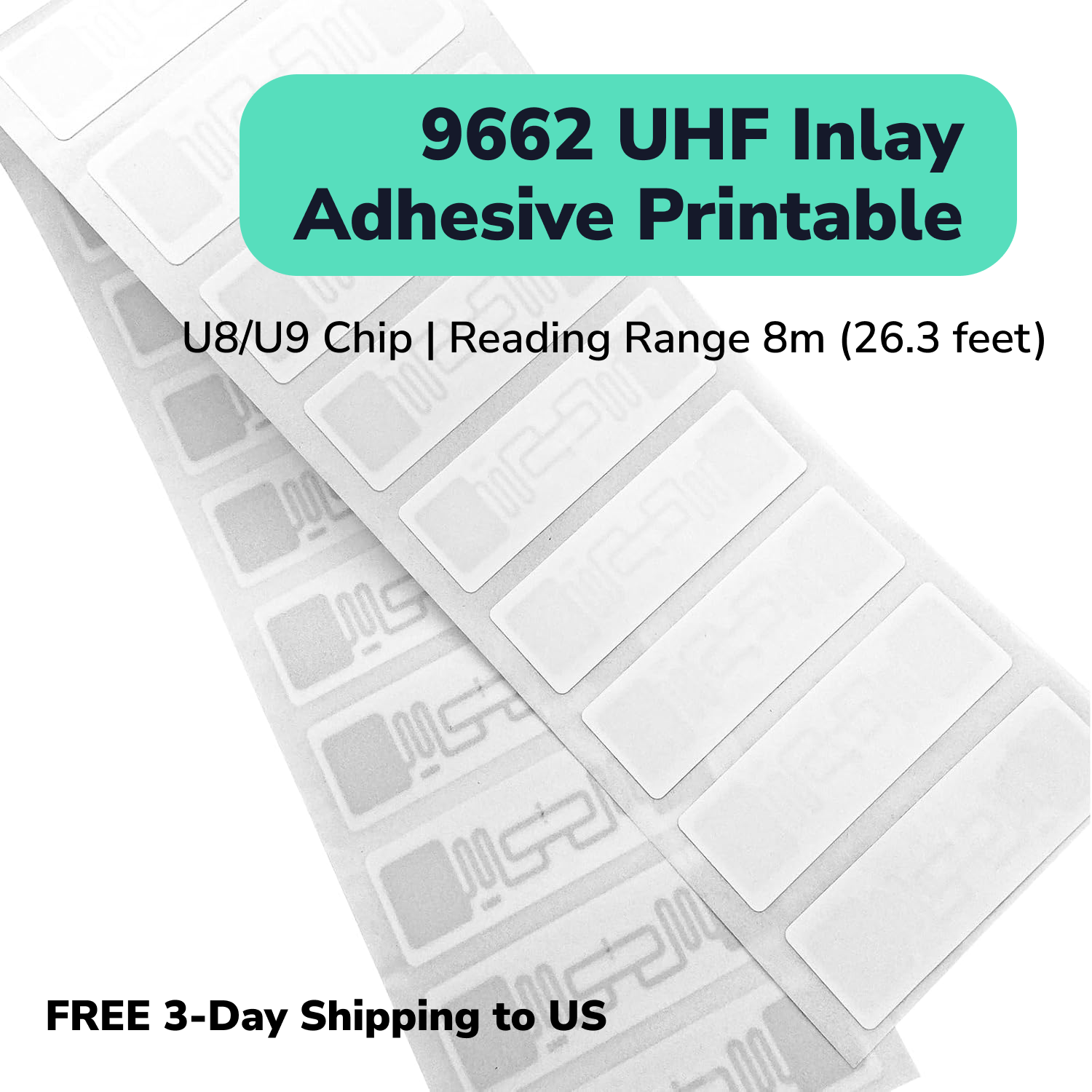
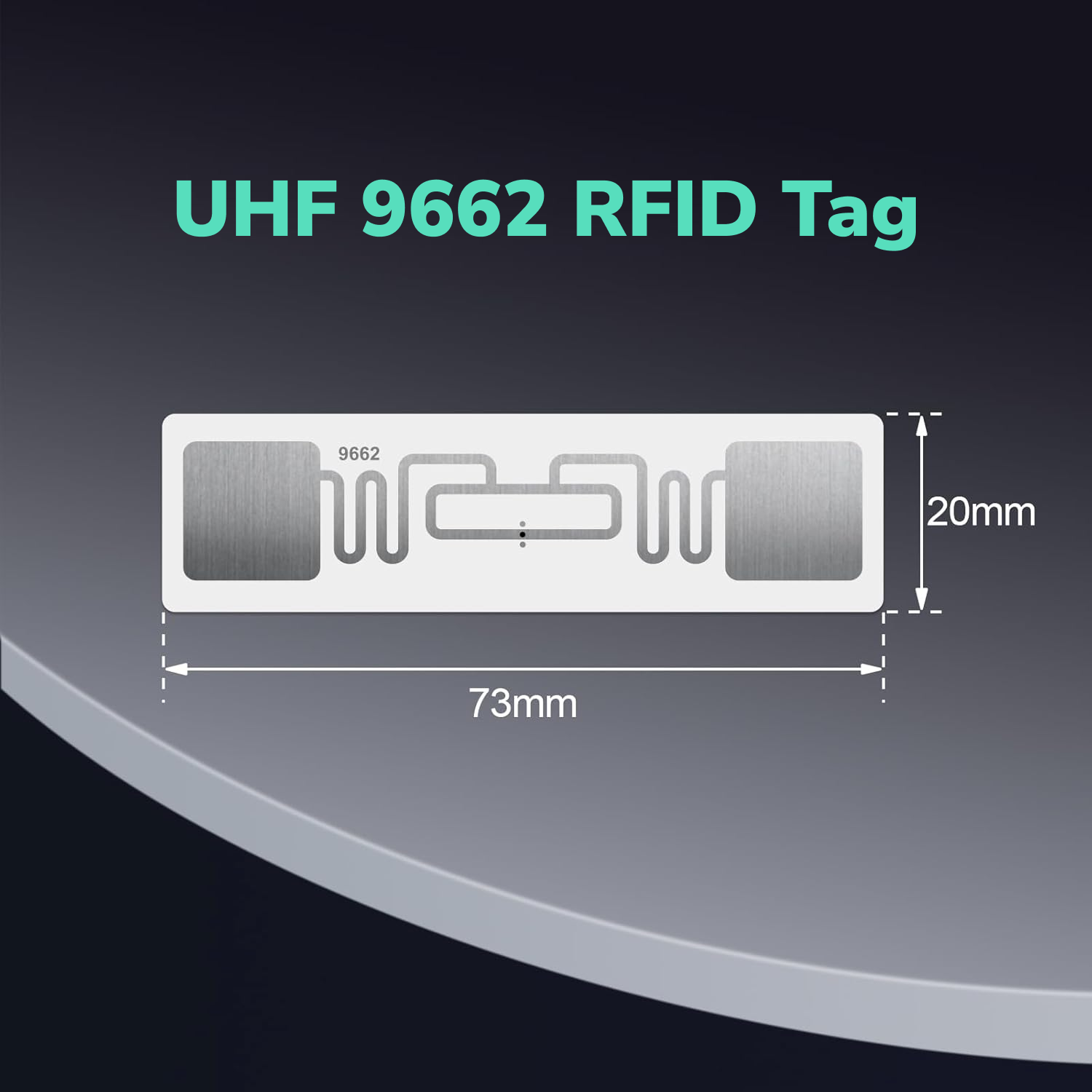
| 9662 Long Range UHF Sticker | Standard range | 12 meters | Long range, versatile adhesive | General parts inventory, carbon fiber panels |
| Ultra Small UHF RFID Tag | Standard range | Several meters | Minimal footprint, flexible | ECUs, sensors, telemetry units |
From Workshop to Trackside: RFID Integration Points
Successful RFID implementation in motorsport typically spans several touchpoints:
- Parts receiving: New components are tagged on arrival and linked to specification records in the team database.
- Workshop inventory: Fixed readers on shelving units or handheld scans provide real-time stock visibility.
- Pre-race build: Mechanics scan all components during car assembly to verify correct parts are installed and log build records.
- Post-race teardown: Components are scanned as they are removed, logging usage hours for lifecycle tracking.
- Transport and logistics: Tagged containers and pallets are tracked between workshop, factory, and race circuits.
Getting Started with RFID for Your Racing Team
Start with the highest-turnover components: brake discs, wheel nuts, and suspension parts. Use PF6025 On Metal tags for metal components and PCB Heat Resistant tags for anything near heat sources. Add Ultra Small tags for electronics and sensors. With one UHF reader, your crew can inventory an entire race weekend build in minutes rather than hours.