

How Robotics Companies Use RFID for Asset Tracking
Robotics and automation companies manage hundreds of unique components across production, testing, and deployment. Drone frames, robotic arm segments, sensor modules, battery packs, and wiring harnesses all need to be tracked from receiving through assembly to field deployment.
UHF RFID technology gives robotics teams a way to identify and locate every tagged component from several meters away without line of sight. A single handheld reader can scan an entire shelf of drone parts or a rack of robotic arm joints in seconds, compared to minutes of manual barcode scanning. Fixed readers at warehouse doorways and production stations log movements automatically as components move through the facility.
The result is faster inventory counts, fewer lost components, and real-time visibility into where every part is at any stage of production or deployment.
Key Challenges in Robotics Component Management
Robotics companies face a unique set of tracking challenges that traditional barcode and manual systems struggle with:
- Small and irregularly shaped parts: Drones, sensors, and circuit boards leave little surface area for labels.
- Metal surfaces: Robotic arms, gear housings, and chassis components are made of conductive metals that interfere with standard RFID signals.
- Outdoor and harsh environments: Agricultural robots, autonomous ground vehicles, and field-deployed drones operate in rain, heat, and dust.
- High-density storage: Components stacked on shelves or in bins require tags that can be read without individual handling.
- Production line speed: Components move through assembly stations quickly, requiring fast, automated identification.
UHF RFID addresses each of these challenges when you match the right tag type to the right surface and environment.
Which RFID Tags Work Best for Robotics Applications
Ultra Small Tags for Drones and Miniature Components
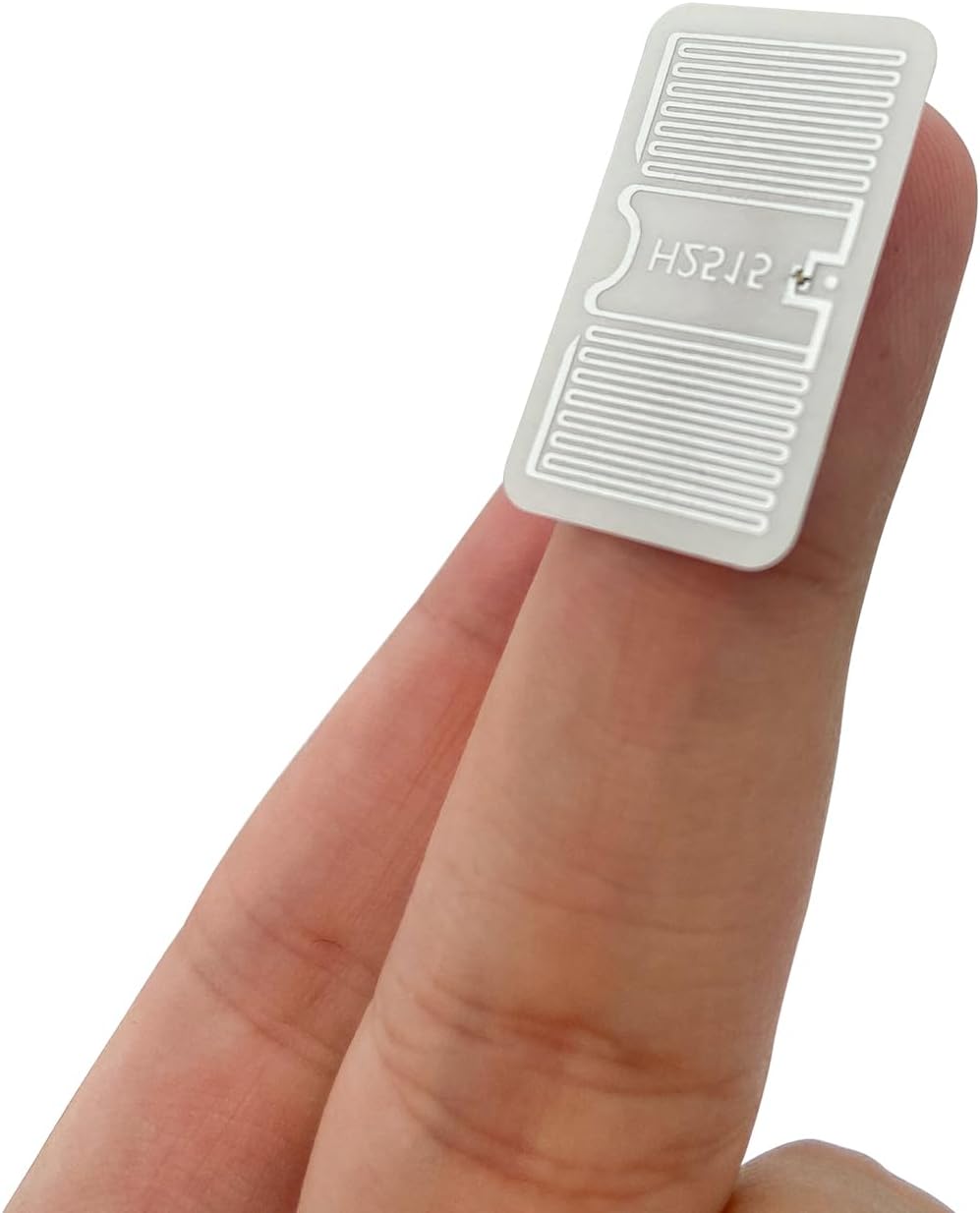
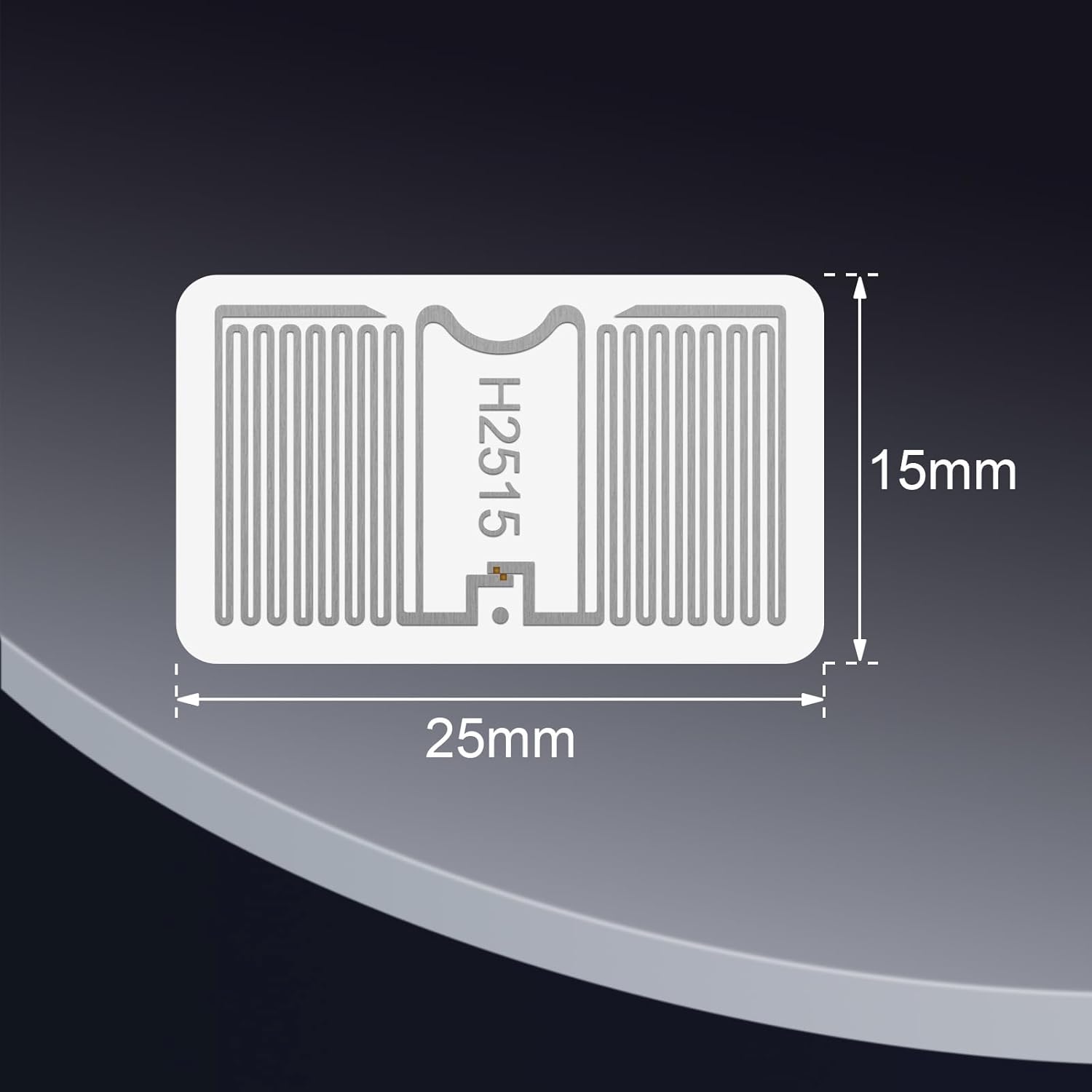
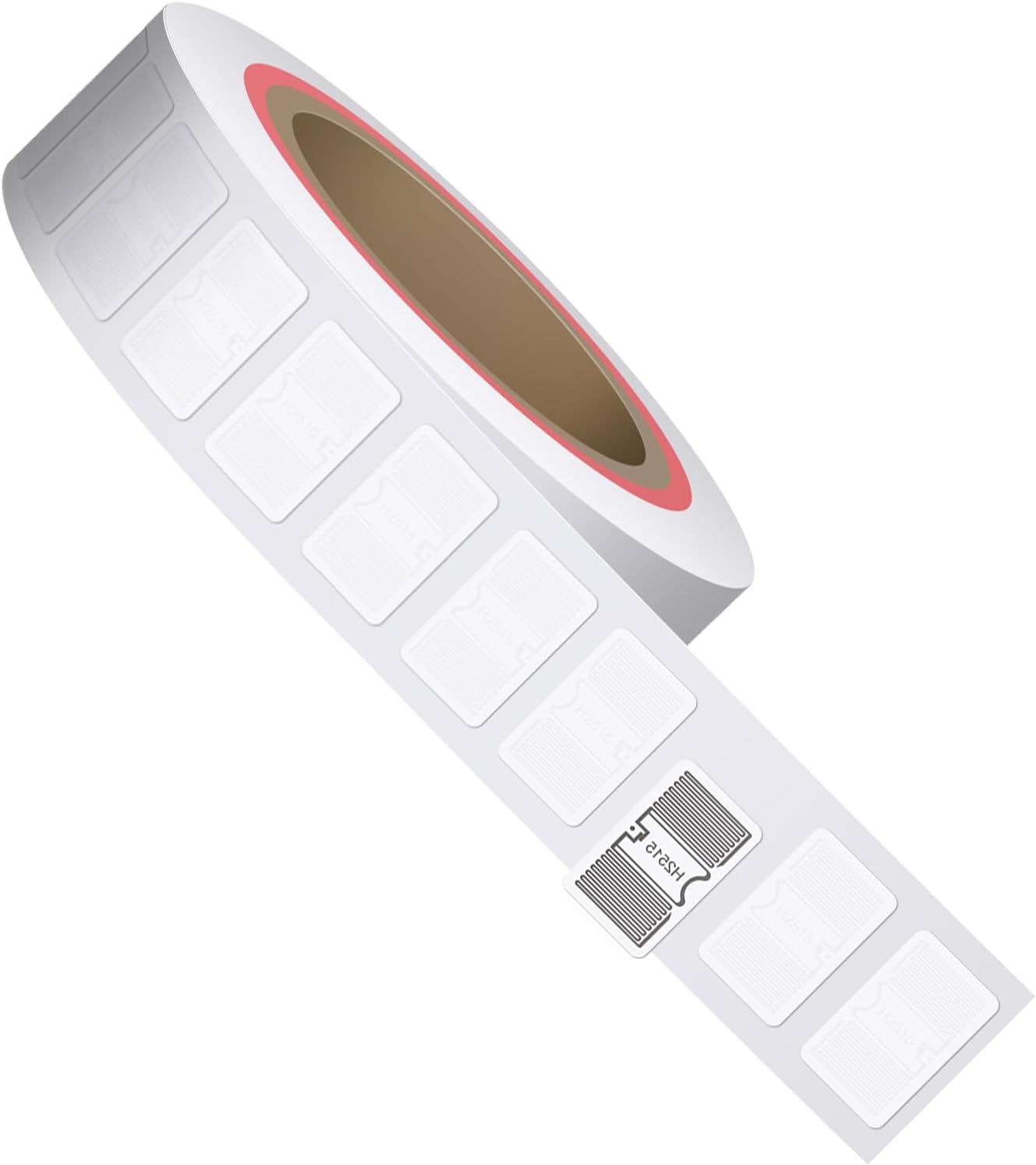
The Ultra Small UHF RFID Tag is designed for the smallest components in a robotics inventory. Its minimal footprint fits on drone frames, PCBs, connectors, and sensor housings where standard tags are too large. Despite its compact size, it operates on the standard 860-960 MHz UHF frequency and can be read from several meters away with a handheld or fixed reader.
Robotics companies use these tags to track individual circuit boards through production stages, log drone component kits for assembly verification, and inventory small parts like motors, ESCs, and GPS modules in storage bins.
On-Metal Tags for Robotic Arms and Metal Housings
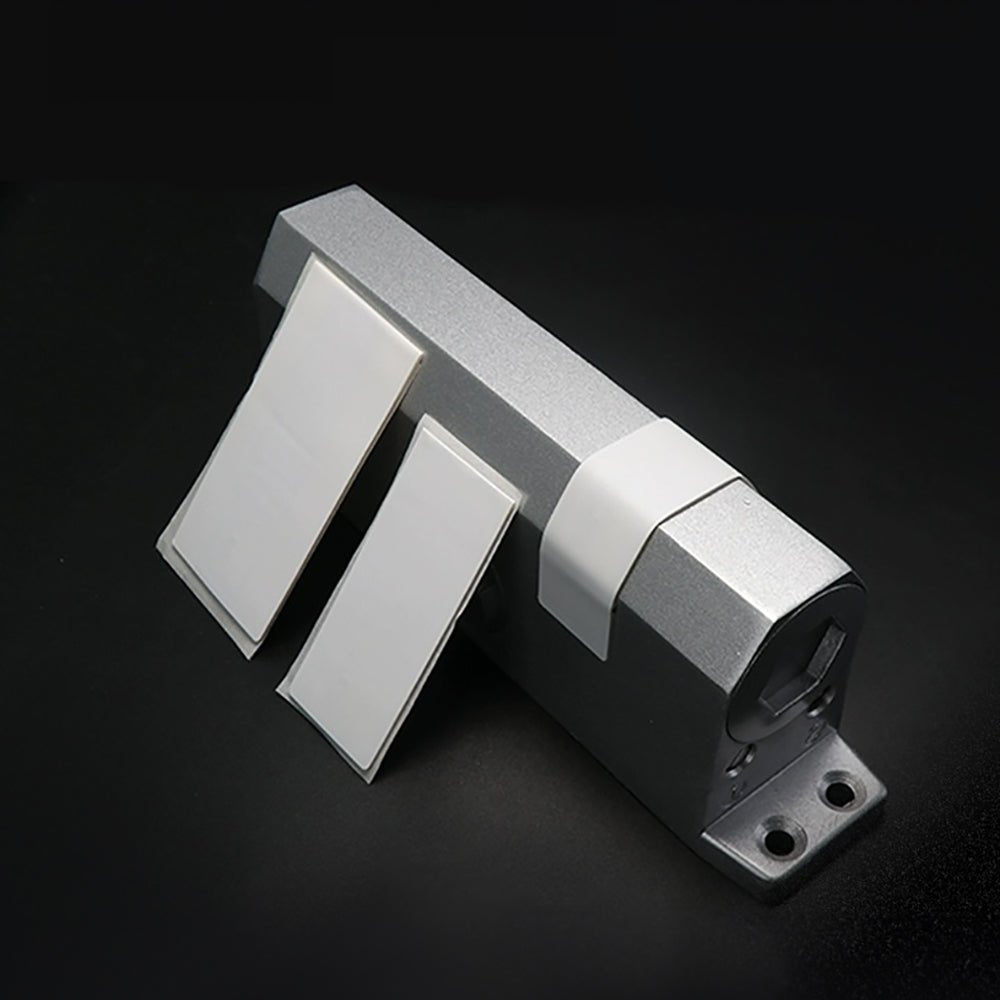
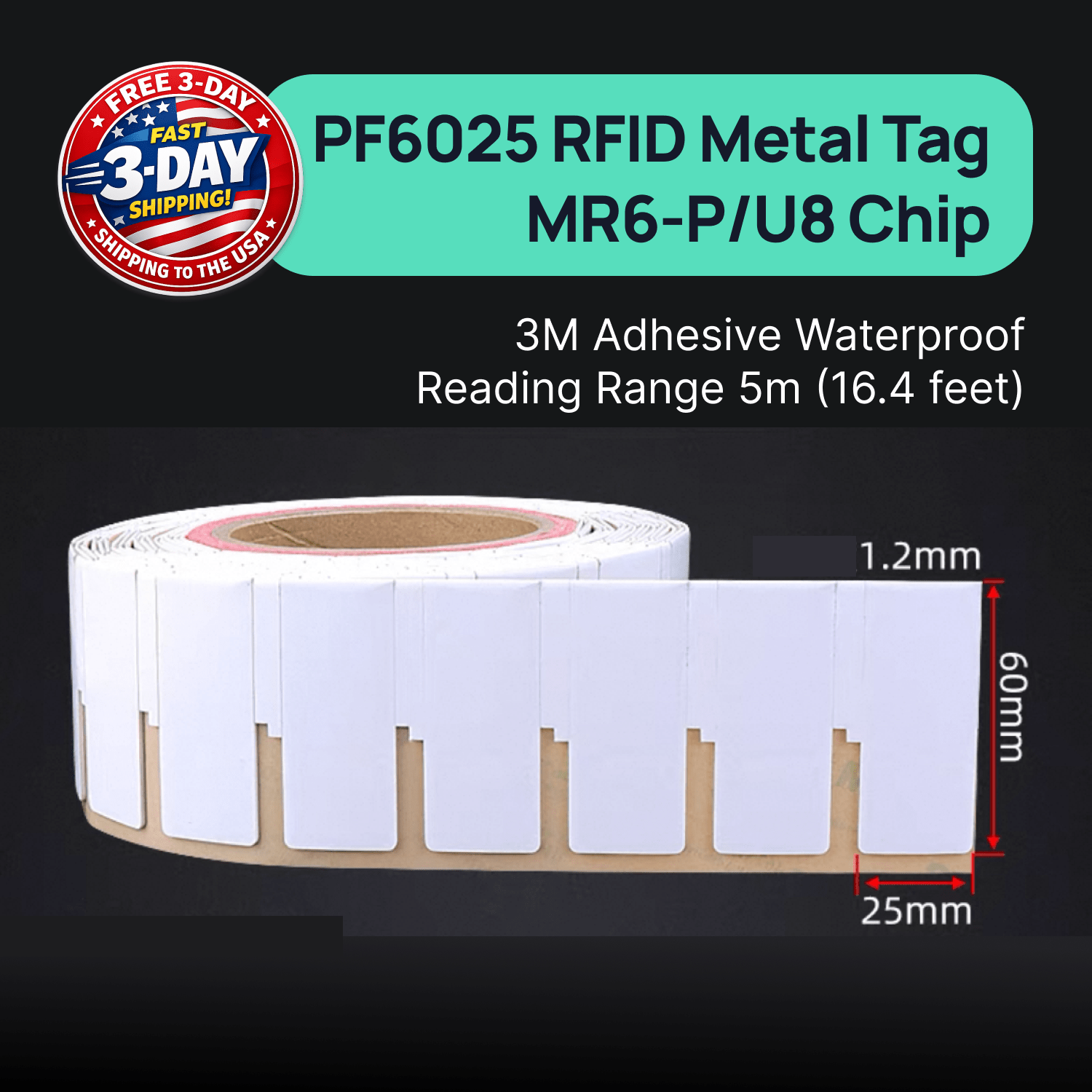
The PF6025 On Metal tag solves one of the most common problems in robotics tracking: reading tags attached to metal surfaces. Standard RFID tags cannot be read when placed directly on metal because the metal reflects and absorbs the RF signal, detuning the tag antenna.
The PF6025 includes a built-in ferrite spacer layer that isolates the tag from the metal surface, maintaining a full 12-meter read range. With its 3M adhesive backing, it attaches directly to robotic arm joints, gear housings, metal tool holders, and equipment frames without any special preparation.
Weatherproof Tags for Outdoor Robotics
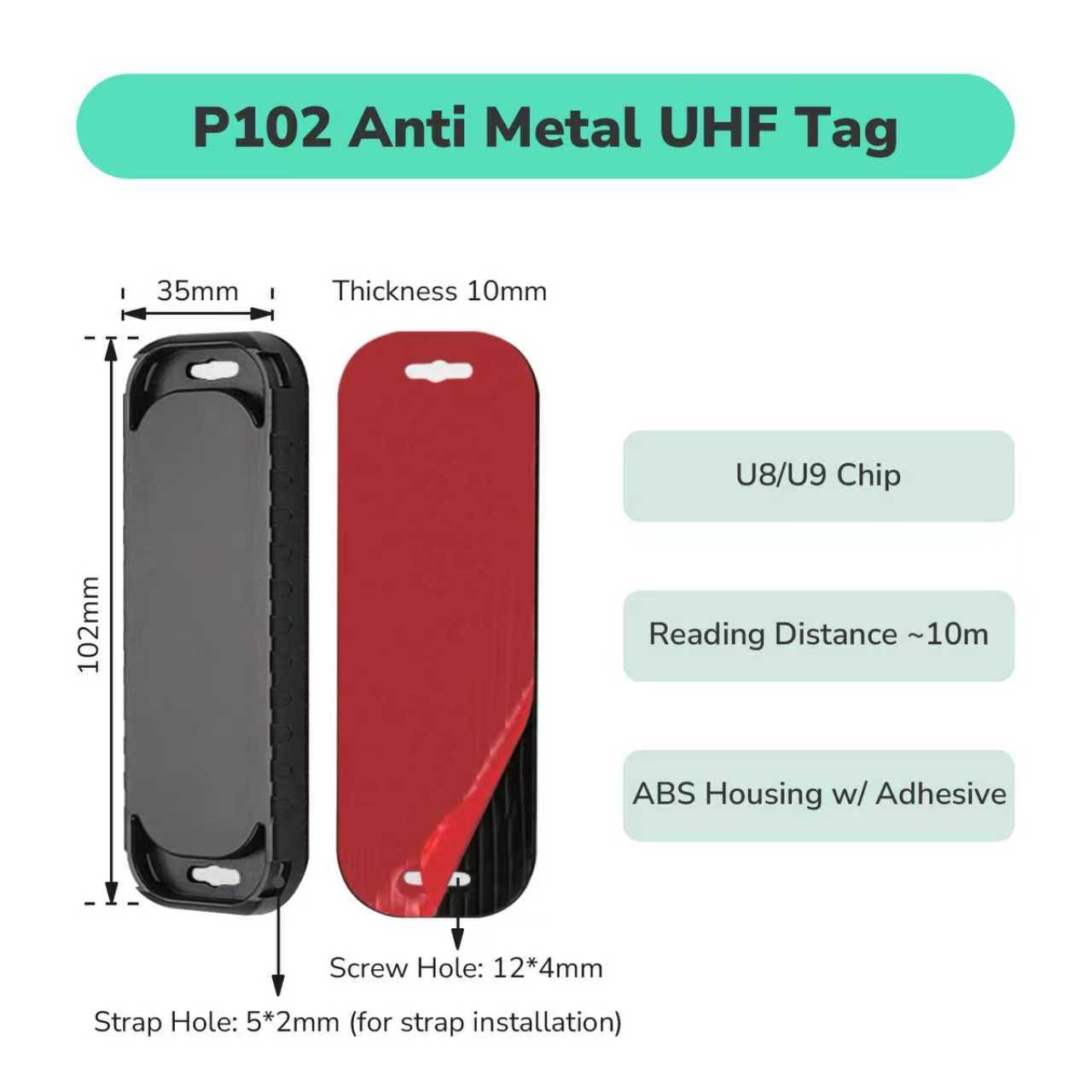
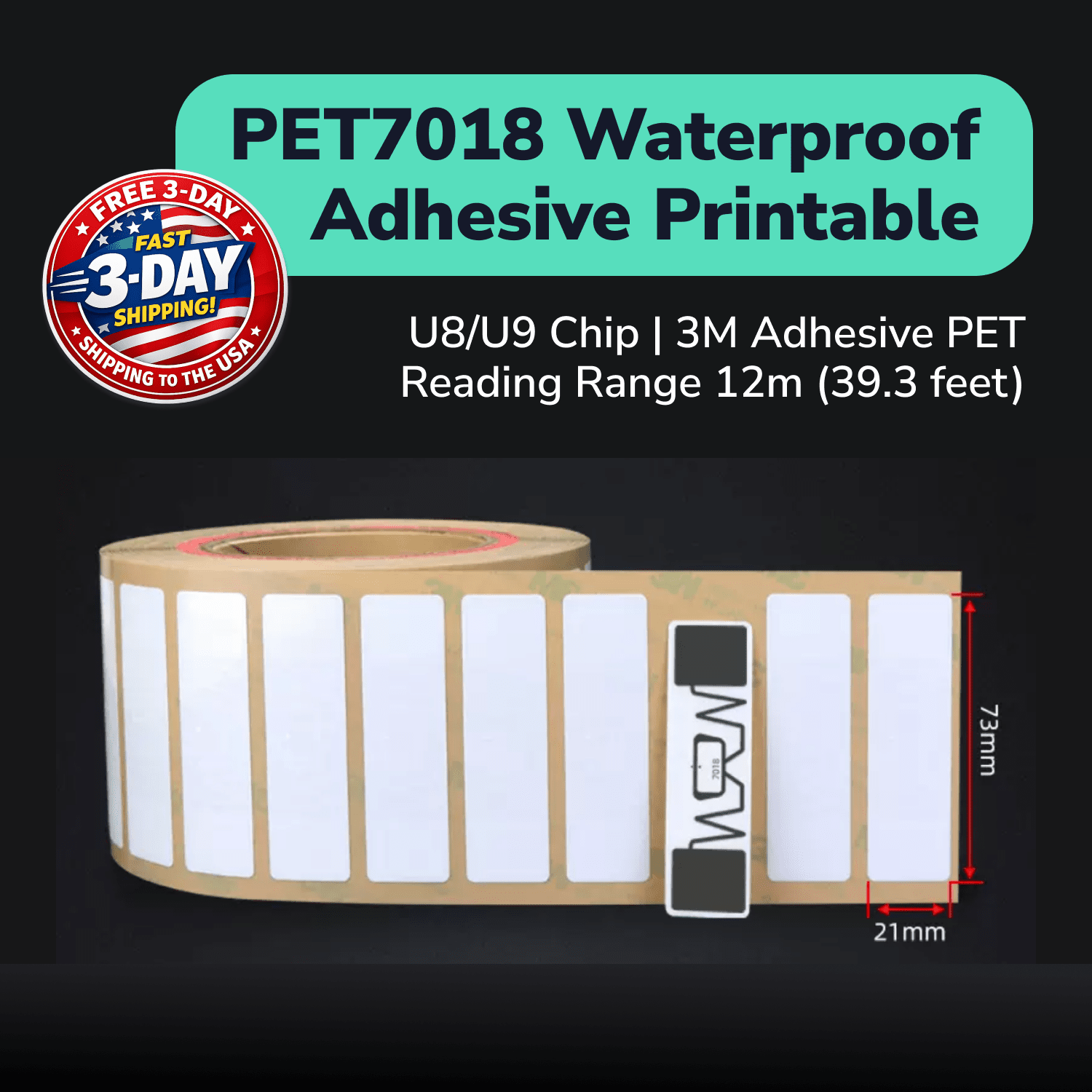
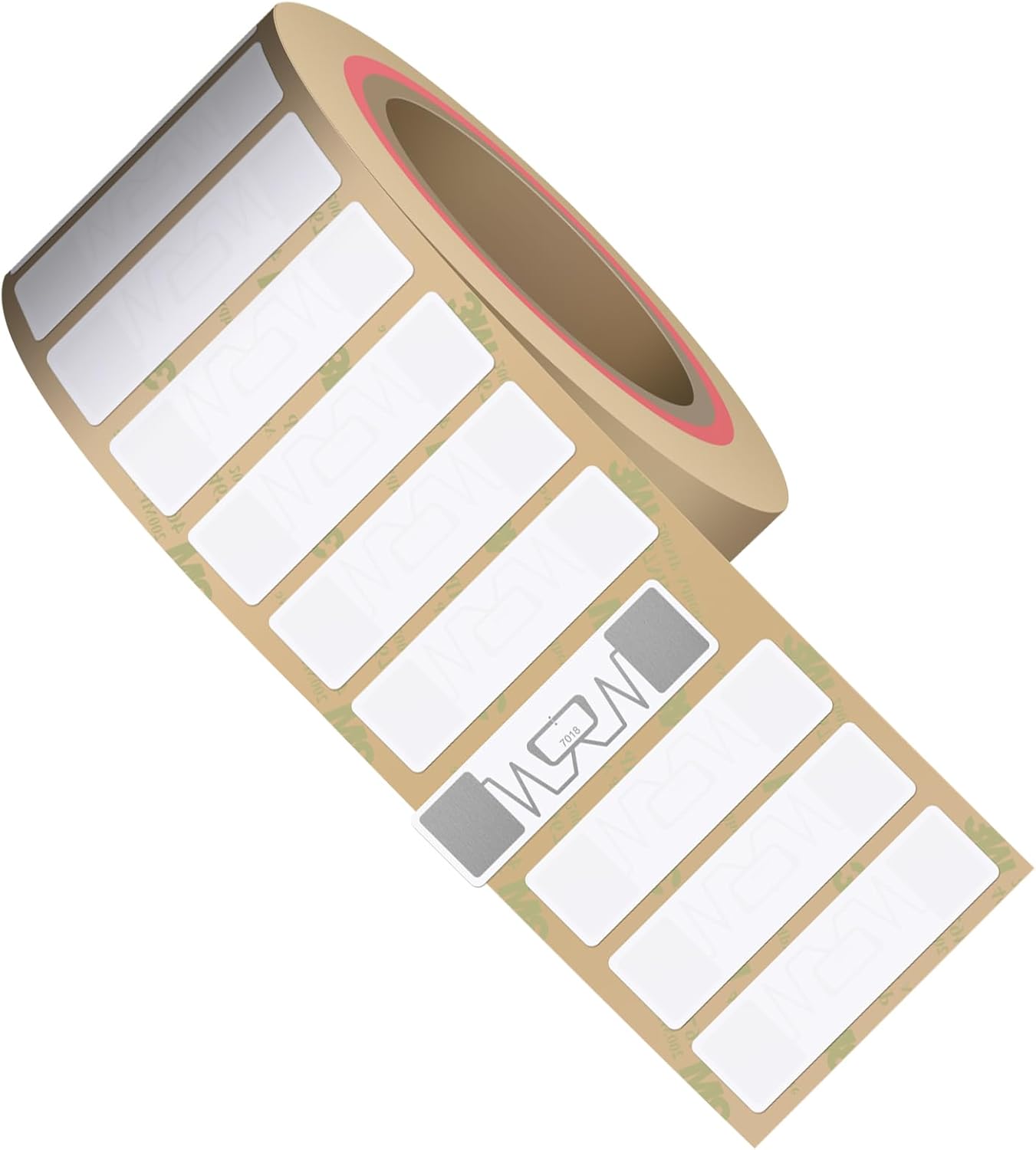
For robots that operate outdoors, the PET7018 Waterproof PET tag provides sealed protection against rain, humidity, and temperature extremes. It operates from -20 degrees C to 60 degrees C and uses waterproof PET material with 3M adhesive backing. For more demanding outdoor conditions, the P102 ABS Mount on Metal tag adds impact resistance, corrosion-proofing, and multiple mounting options including adhesive, screws, and straps.
Agricultural robots, autonomous ground vehicles, and outdoor drone stations use these tags for long-term deployment tracking in environments where standard labels would degrade quickly.
Heavy-Duty Mountable Tags for Industrial Robots
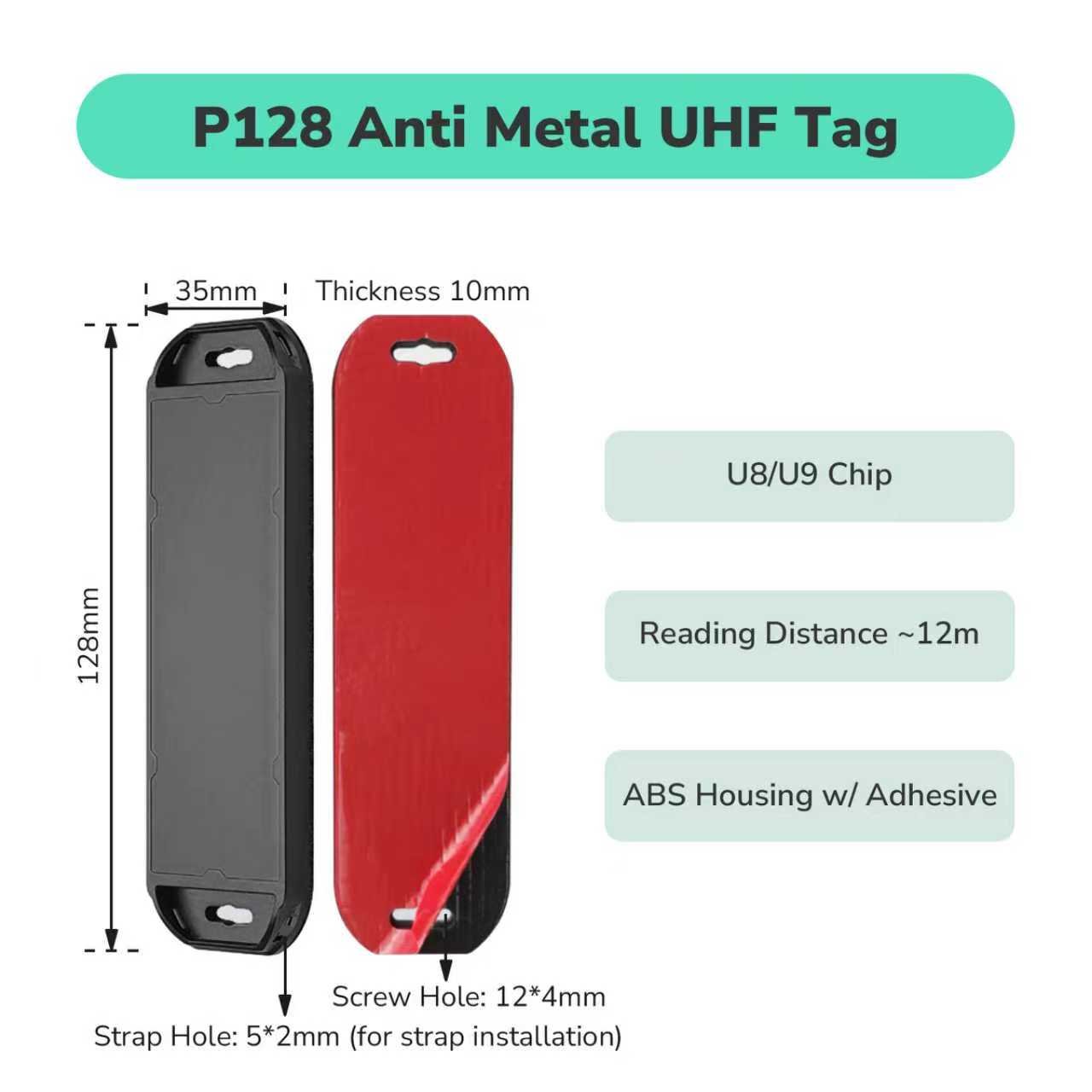
Large industrial robots and automation equipment need tags that survive mechanical stress. The P102 ABS Mount on Metal tag has an ABS and polycarbonate housing rated for impact, vibration, and repeated handling. It supports adhesive, screw, and strap mounting, making it suitable for robot bases, conveyor systems, and automated guided vehicles that operate in factory environments.
RFID Product Comparison for Robotics
| Tag | Read Range | Key Feature | Best Robotics Use Case |
|---|---|---|---|
| Ultra Small UHF RFID Tag | Several meters | Minimal footprint, flexible adhesive | Drone components, PCBs, sensors |
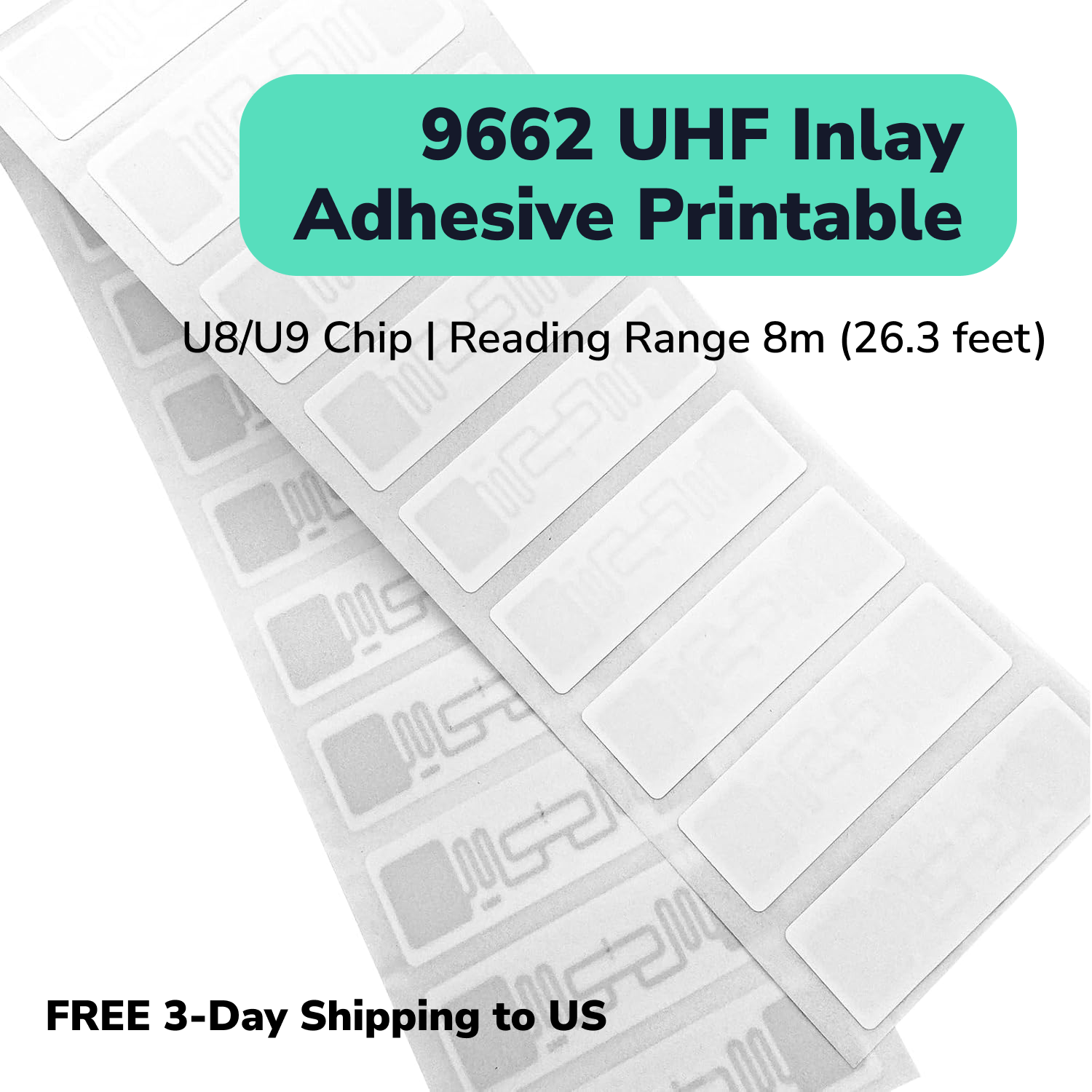
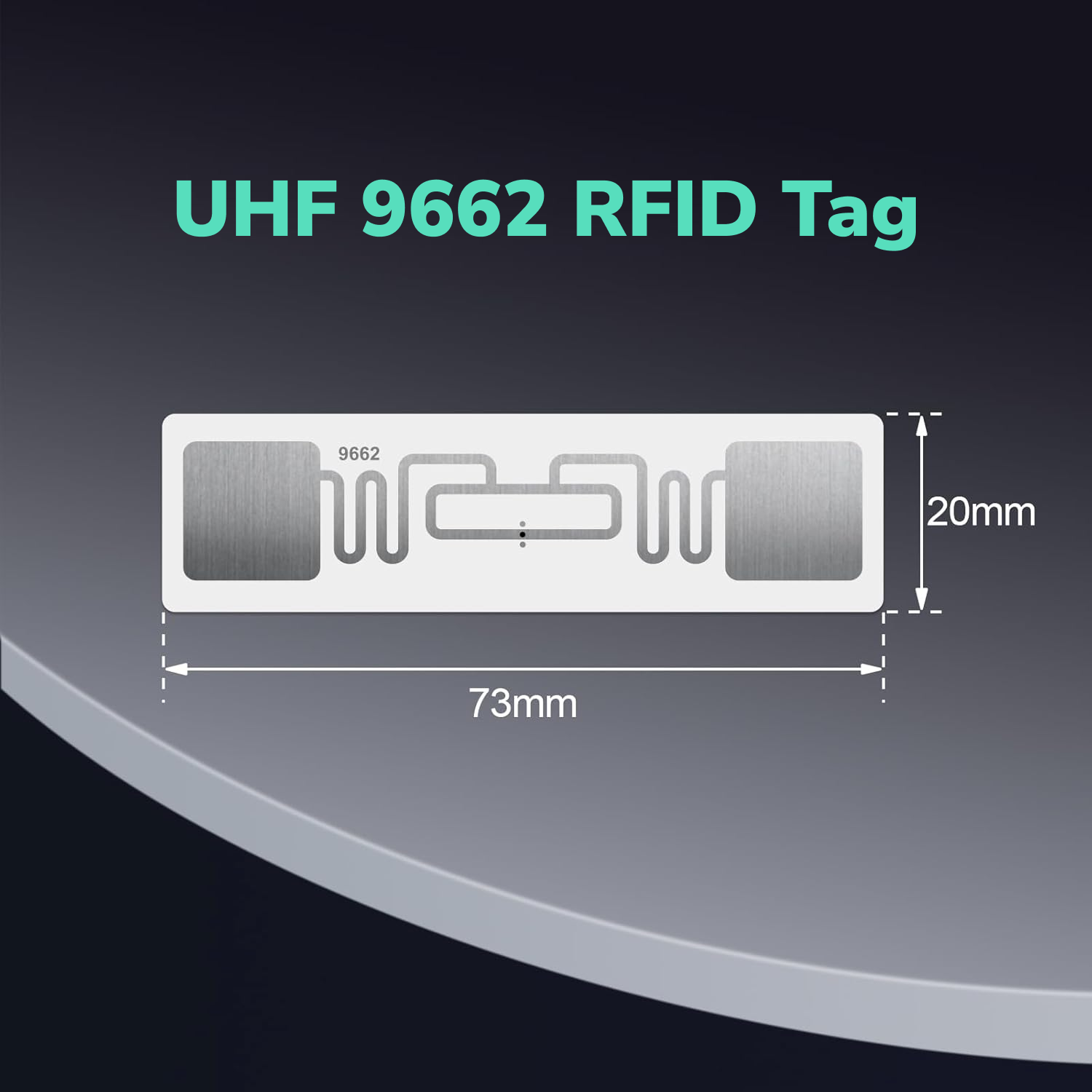
| 9662 Long Range UHF Sticker | 12 meters | Long read range, versatile | General warehouse inventory, shelved parts |
| PF6025 On Metal | 12 meters | Anti-metal ferrite layer, 3M adhesive | Robotic arms, metal housings, tool holders |
| PET7018 Waterproof PET | 12 meters | Waterproof, 3M adhesive | Outdoor robots, wet environments |
| P102 ABS Mount on Metal | Varies | Impact-resistant, multi-mount | Industrial robots, AGVs, heavy equipment |
Implementation Considerations
When deploying RFID for robotics tracking, consider these factors:
- Reader placement: Fixed readers at production stations and warehouse doorways capture automatic scans. Handheld readers are useful for spot checks and field deployment tracking.
- Tag placement: Attach tags to flat, accessible surfaces away from moving parts. On metal surfaces, always use on-metal tags. On small components, choose the Ultra Small tag.
- Integration: Link tag EPC codes to your inventory management or ERP system so each scan updates part location, status, and history records.
- Environment: Match the tag material to the operating environment. Indoor dry storage works with standard adhesive tags; outdoor or wet environments need waterproof or ABS-encased tags.
Getting Started with RFID for Robotics
Start by tagging your highest-value or most frequently misplaced components. The Ultra Small tag and 9662 Long Range sticker cover most indoor robotics inventory. Add PF6025 On Metal tags for metal components and P102 ABS Mount tags for outdoor or heavy-duty applications. With a single UHF reader, you can scan every tagged part across all these tag types without changing equipment.