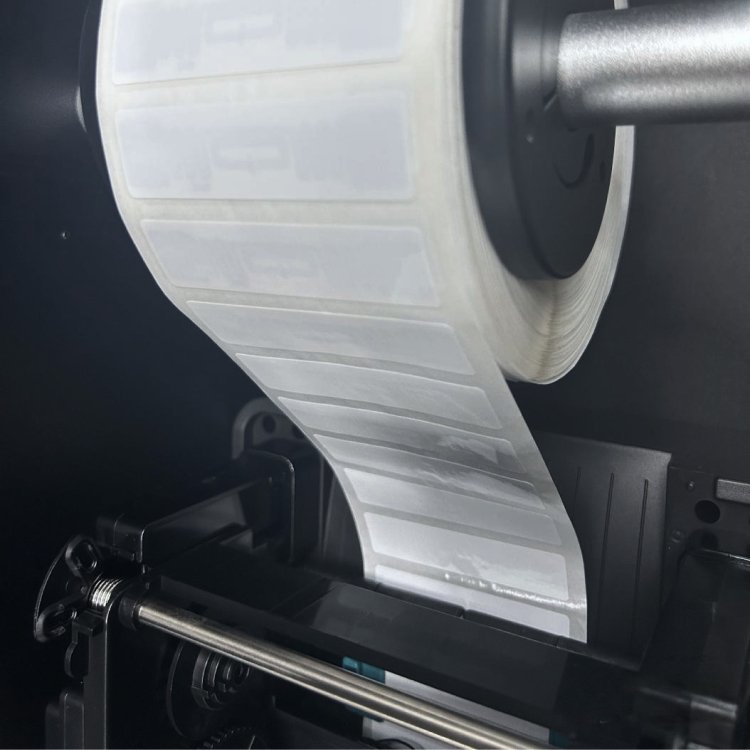


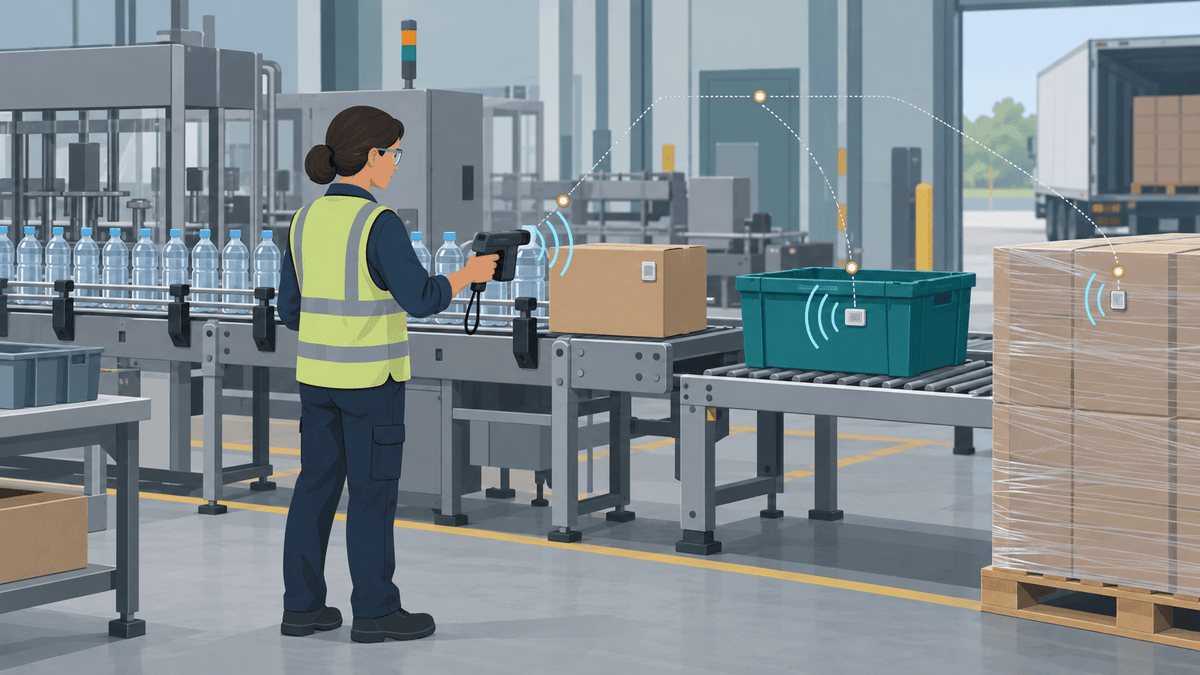
UHF RFID helps food and beverage teams identify bottles, cases, reusable containers, and pallets at planned production and distribution points. This guide shows you how to choose the right packaging level, tag format, read point, and traceability record while accounting for liquids, curves, metal, moisture, and fast-moving lines.
The best RFID setup starts with one practical question: what package does your next process step need to identify? Your answer may be one bottle, one case, one reusable tote, or one pallet.
Each RFID read also needs a clear business meaning. A reader can capture a tag identity, but your software must decide whether that read represents packing, pallet building, warehouse receipt, shipment, or another event.
How Can UHF RFID Help Track Food and Beverage Packaging?
UHF RFID can identify tagged bottles, cases, totes, pallets, and reusable packaging without requiring a worker to aim at every barcode in direct view. A planned read point can capture several suitable tags as packaging moves through production, storage, or shipping.
The RFID tag gives each package an identity. Your packaging, warehouse, or traceability system connects that identity with the product, lot, package level, location, and process status.
The system still needs rules that turn raw reads into useful records. One tag response does not prove that a case is complete, a pallet contains the expected products, or a shipment left the building.
A practical UHF RFID packaging workflow connects four decisions:
- Choose the bottle, case, tote, pallet, or reusable asset that needs an identity.
- Select a tag that fits the package surface, available space, and handling conditions.
- Place a reader around one controlled packaging or distribution event.
- Let your software review the read and update the correct record.
What Should You Tag: Bottle, Case, Tote, Pallet, or Reusable Container?
Tag the packaging level that the next business action needs to identify. Item-level bottle tracking answers a different question from case, pallet, or reusable-container tracking.
| Packaging level | What the tag identifies | When this level fits | What the tag does not prove |
|---|---|---|---|
| Bottle or item | The tag identifies one sellable or process item. | Your team needs a separate record for every bottle or item. | The tag does not prove product condition, fill level, quality, or regulatory status. |
| Case | The tag identifies one packed case. | Workers move and count products by case. | The case tag does not prove that every expected bottle is inside. |
| Reusable tote or crate | The tag identifies one returnable container. | Your team needs to issue, receive, clean, refill, or return the same asset. | The container tag does not automatically identify its current contents. |
| Pallet | The tag identifies one palletized load. | Warehouse and shipping events happen at pallet level. | The pallet tag does not prove that every case remains on the pallet. |
| Other returnable transport item | The tag identifies a keg, bin, dolly, or other reusable asset. | Your team needs to track ownership, circulation, or return. | The asset tag does not prove where it is between controlled read points. |
Bottle-level tagging fits workflows that need an identity for every item. Your team must still decide whether the RFID label belongs on the bottle body, an existing paper label, the cap, or another suitable part of the package.
Case-level tagging reduces the number of labels and reads when the case is the main handling unit. Your system can link the case identity with a product, lot, quantity, and packaging event.
Pallet-level tagging supports receiving, staging, and shipping when workers move full loads. Your software should create and verify the relationship between the pallet and its cases instead of assuming that every nearby case belongs to the load.
Reusable packaging needs a permanent asset identity and a changing contents record. The tote, crate, keg, or bin keeps the same tag while the linked product, lot, quantity, location, and status can change after each use.
How Do Liquids, Curved Bottles, Foil, Metal, and Moisture Affect UHF RFID?
Liquids, curved packages, foil, metal, moisture, and close grouping can change how a UHF RFID tag responds. Your test should use the filled package and the real read zone instead of relying only on an empty bottle or a flat sample.
Liquid-filled bottles can absorb or detune UHF radio energy. The label position, air gap, bottle shape, fill level, orientation, and distance from the reader can all change the result.
Curved bottles can bend a label and change the antenna shape. A label that sticks to a curve still needs enough usable area to keep the inlay from folding, wrinkling, or crossing a sharp edge.
Foil seals, metal cans, and nearby machine frames can reflect or disrupt the read zone. A standard non-metal inlay should not be treated as a direct-on-metal tag, and a label that works on PET may behave differently beside foil or metal.
Moisture and condensation can affect attachment and the surrounding radio environment. A waterproof label construction does not automatically prove washdown, cleaning-chemical, cold-chain, abrasion, or food-contact suitability.
Dense cases can place many liquid-filled products and tags close together. Your pilot should check tag spacing, package direction, case dividers, antenna position, reader power, conveyor speed, and nearby tagged stock.
The RAIN RFID field guide explains why water, metal, tag orientation, people, nearby tags, and the real site can affect read performance. Treat laboratory or reference results as a starting point and verify the complete system in the intended environment.
Which UHF RFID Tag Format Fits Bottles, Caps, Cases, and Totes?
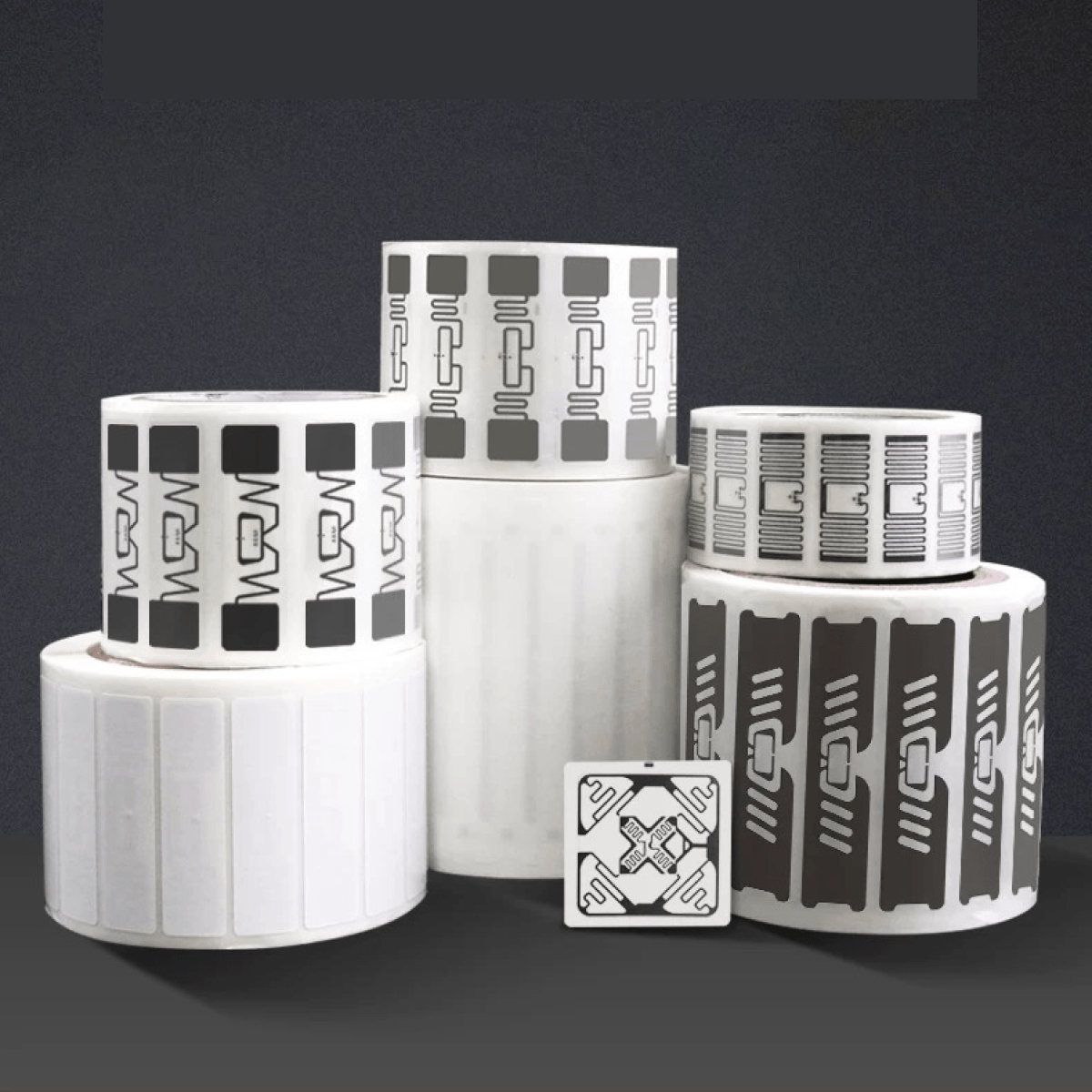
Choose the UHF RFID tag format around the package surface, label space, printing need, exposure, and reader path. A bottle body, small cap, cardboard case, and reusable plastic tote rarely need the same label shape.
| Tag | Practical starting role | Verified format | What your pilot still needs to answer |
|---|---|---|---|
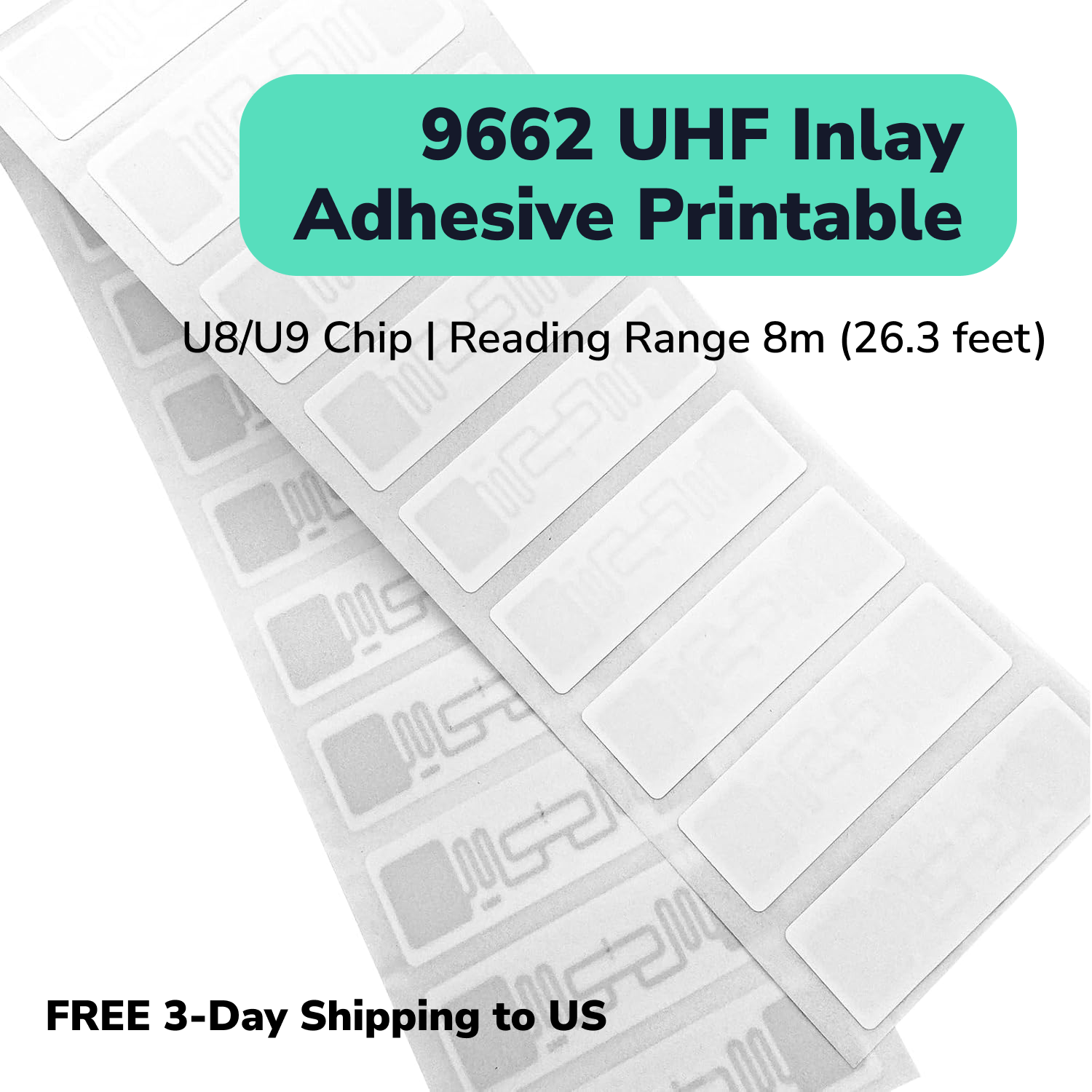
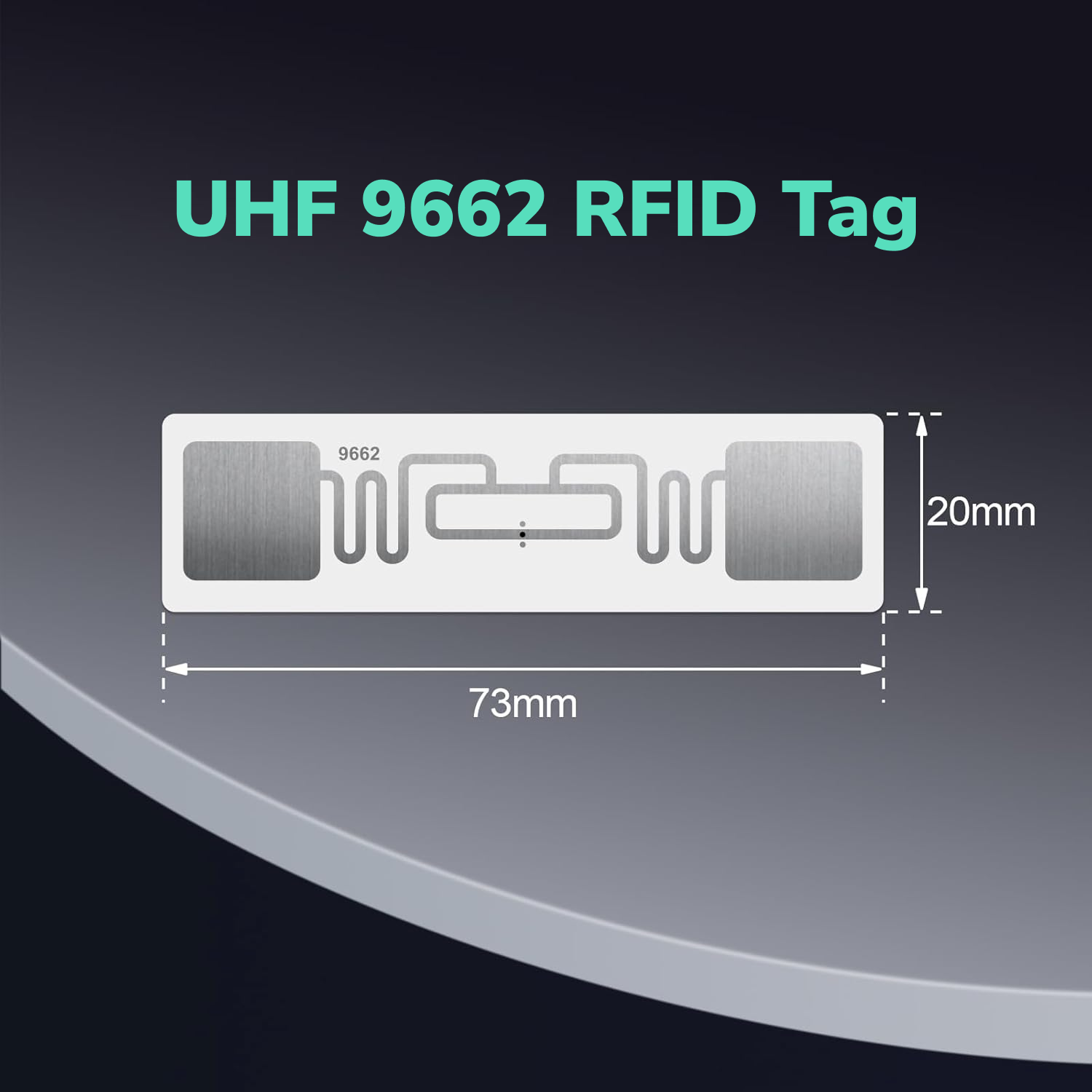
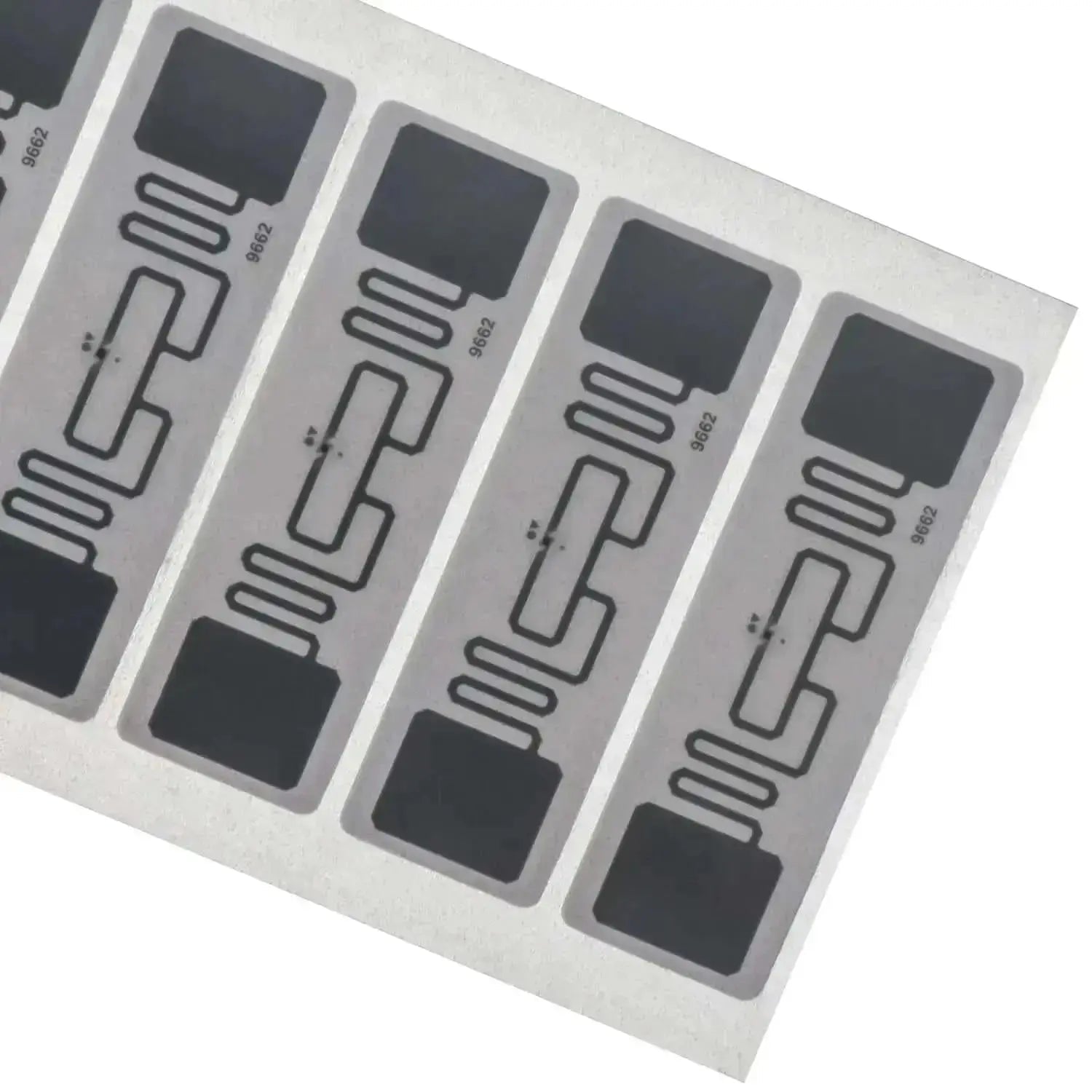
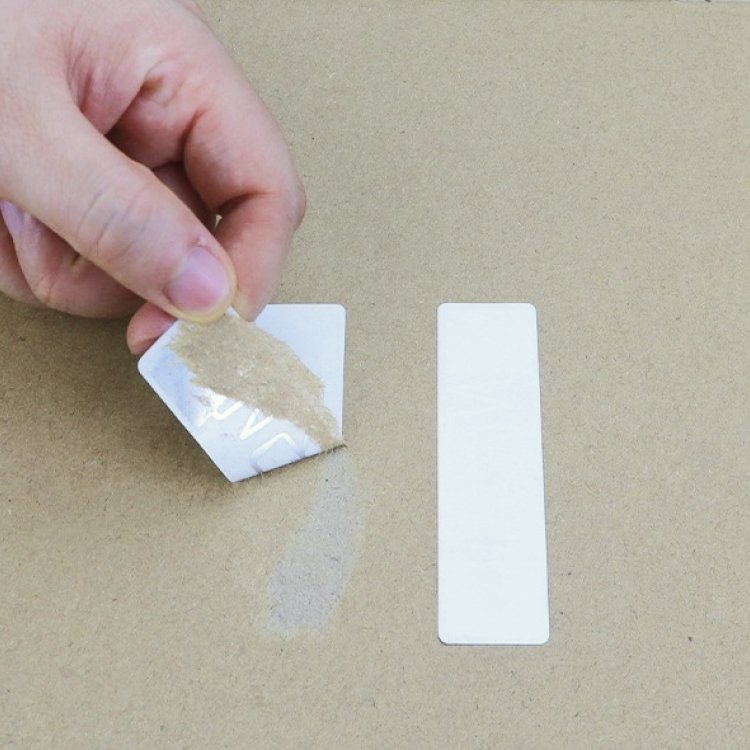
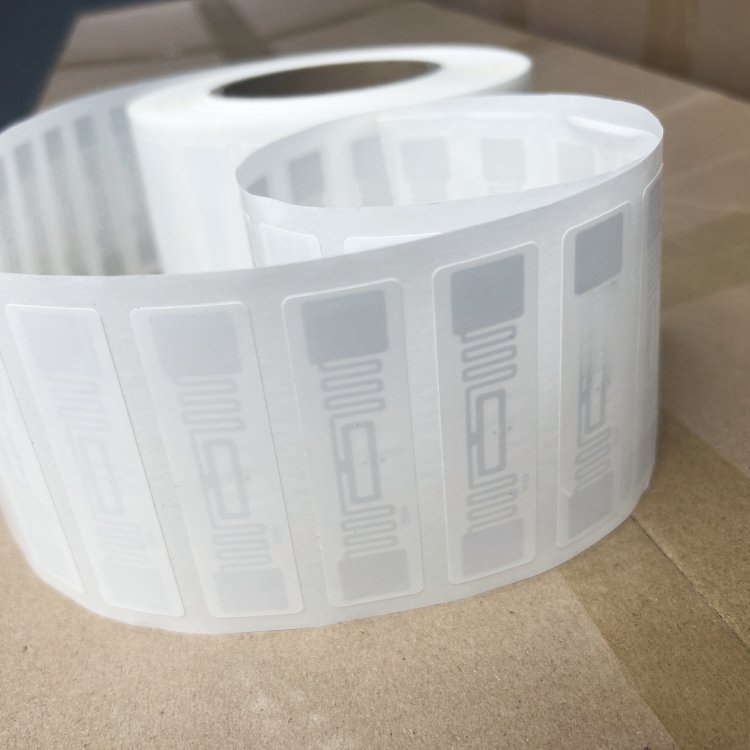
| 9662 printable UHF RFID sticker | Use 9662 on a suitable non-metal bottle label, package, or case when a long, narrow printable format fits. | 9662 measures 73 mm × 20 mm and uses coated paper with an adhesive layer. | Test the filled package, curve, label backing, moisture, handling, printing, and real reader zone. |
| 5030F printable UHF RFID sticker | Use 5030F when a wider printable non-metal label area fits the package. | 5030F measures 54 mm × 34 mm and uses an adhesive inlay construction. | Test the package contents, curve, orientation, spacing, printing, and line conditions. |
| M30 ultra-small UHF RFID wet inlay | Use M30 as a round cap or lid candidate when the available area is limited. | M30 measures 30 mm in diameter and is flexible, self-adhesive, and non-printable. | Test cap material, cap shape, liquid proximity, sealing process, moisture, and reader path. |
| J41 ultra-small UHF RFID wet inlay | Use J41 when a very small round cap area needs a candidate for evaluation. | J41 measures 15 mm in diameter and is flexible, self-adhesive, and non-printable. | Test whether the smaller format provides enough performance in the actual package and read zone. |
| PET7018 waterproof printable UHF label | Use PET7018 on a suitable exposed non-metal package or reusable container when you need its printable waterproof PET construction. | PET7018 measures 73 mm × 21 mm and uses a printable PET face with an adhesive layer. | Test moisture, condensation, cleaning, chemicals, abrasion, curve, cold conditions, and attachment. |
| H47U printable UHF RFID sticker | Use H47U as a larger printable non-metal baseline for suitable cases, cartons, or plastic totes. | H47U measures 50 mm × 50 mm. | Test contents, stacking, placement, tag density, handling, and the intended reader station. |
The 9662 and 5030F give you two printable shapes for suitable non-metal bottle labels and packages. The better option depends on the usable label panel, how the inlay sits on the curve, and how the filled package moves past the reader.
The M30 and J41 give you smaller round candidates when a bottle cap or lid offers the only practical tag position. These wet inlays are not printable, so your workflow may need a separate visible code or a protected placement method.
The PET7018 gives you a printable waterproof PET construction for suitable non-metal surfaces. Your team must still qualify the label for the actual cleaning method, chemicals, temperature, abrasion, and package contact requirements.
The H47U gives you a larger printable option for suitable cardboard cases and plastic reusable containers. Do not use H47U as a direct-on-metal label when the tag will touch a metal keg, can, rack, or machine part.
Our PET bottle RFID guide compares bottle-body and cap placement in more detail. This industry guide keeps the wider focus on bottles, cases, reusable packaging, pallets, and the events that connect them.
Where Should You Capture RFID Reads on a Bottling and Packaging Line?
Place each RFID reader at one controlled business event, such as tag commissioning, case packing, pallet building, warehouse receipt, or shipment. A clear event makes every read easier to check and connect with the right record.
| Read point | What the reader captures | What the system can propose | What still needs control or confirmation |
|---|---|---|---|
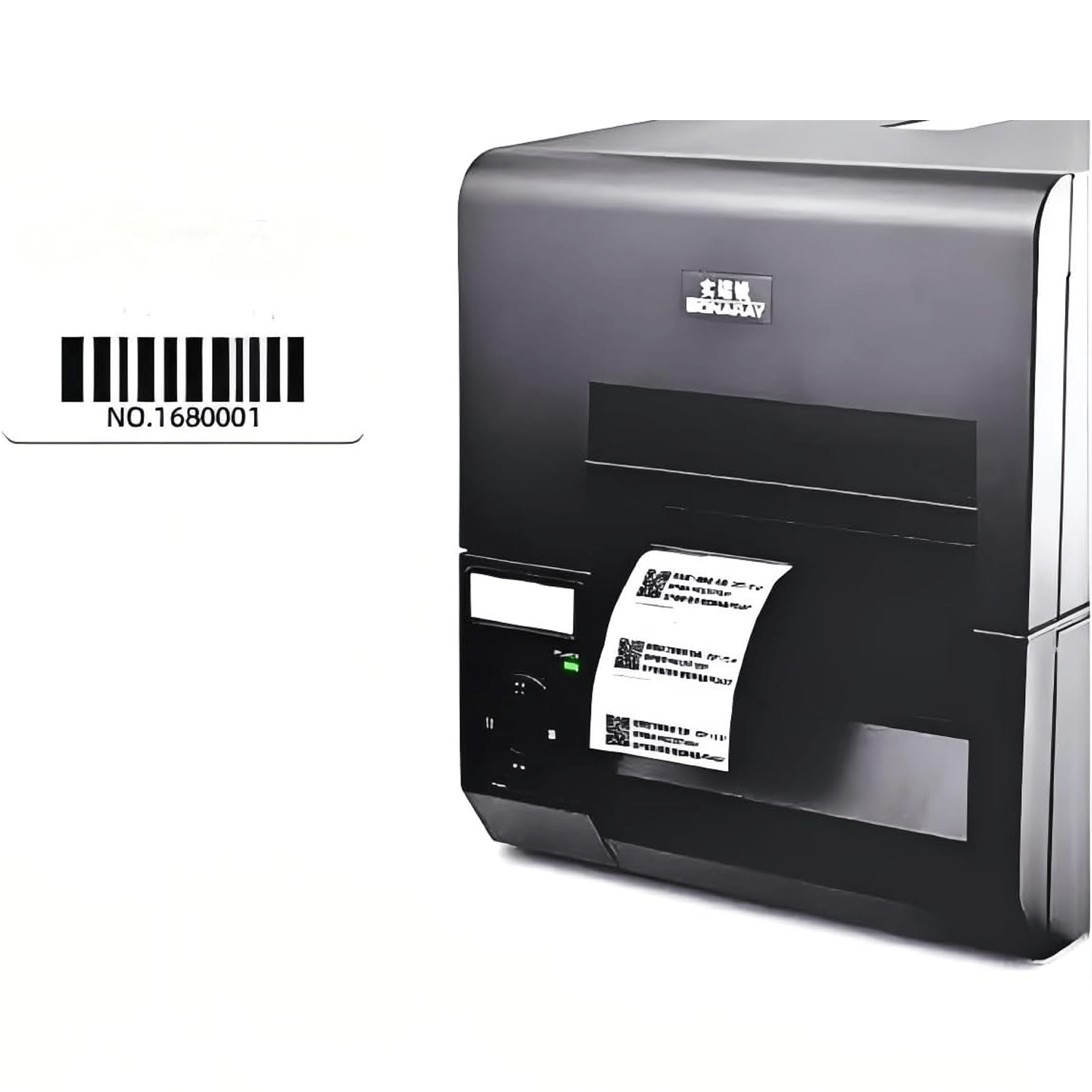
| Encoding and verification station | The station captures one tag as workers print or encode it. | The system can link the EPC with the correct package record. | The station should verify the written identity and avoid encoding the wrong nearby tag. |
| Bottle or item checkpoint | The reader captures tagged items through one controlled path. | The system can propose an item-arrival or packaging event. | The setup must control speed, spacing, orientation, liquid, and tags in nearby lanes. |
| Case-pack station | The reader captures bottles, items, or the case identity. | The system can propose a pack or case-close event. | The process should compare expected and captured identities before confirming the case. |
| Pallet-build station | The reader captures a pallet and its expected cases. | The system can propose an item-to-pallet relationship. | The workflow should exclude cases waiting beside the build area. |
| Warehouse receiving point | The reader captures incoming cases, pallets, or reusable assets. | The system can propose a receipt or location event. | The process may still need quantity, damage, or quality confirmation. |
| Dock door | The reader captures loads moving through a shipping or receiving lane. | The system can propose a load or shipment event. | The antennas must separate the intended lane from adjacent doors and staged stock. |
| Handheld exception check | A worker captures a selected package, case, pallet, or area. | The system can propose a correction, search, or audit record. | The operator path, distance, angle, and nearby stock can change the result. |
The physical read zone should match the business event. A case-pack reader should focus on the packing area, while a dock-door reader should focus on the correct lane and direction of travel.
Higher reader power does not always create a better result. Extra power can capture tags from the next workstation, a nearby pallet, or the wrong conveyor lane.
Your qualification record should include the reader, antennas, position, power, package speed, spacing, orientation, tag population, nearby equipment, and software filter. Your team should change one variable at a time when a missed or unwanted read appears.
How Should RFID Work with Barcodes, Lot Codes, and Traceability Records?
Use each Electronic Product Code, or EPC, as a unique lookup key, then keep the product, lot, expiry, package hierarchy, status, and history in your traceability system. The tag should not carry every business detail when the software can retrieve the current record from one controlled identity.
Printed barcodes and UHF RFID can support the same package without doing the same job. A barcode gives workers and trading partners a visible, direct-scan option, while UHF RFID supports non-line-of-sight capture at planned read points.
The GS1 Global Traceability Standard provides a technology-neutral framework for identifying traceable objects and recording critical tracking events. Your team should map each RFID event to the real business process instead of treating a tag response as a complete traceability record.
The package hierarchy should show which items belong to a case and which cases belong to a pallet. Your system should create, verify, change, and close those relationships when workers pack, repack, split, combine, or ship the load.
GS1 EPCIS provides an optional event-data model for organizations that need to exchange visibility information across systems. EPCIS can describe what happened, when it happened, where it happened, why it happened, and how the objects were handled.
A closed-loop packaging line may use a simpler database or integration. Your project should start with the required event and confirm the available import, export, middleware, or application programming interface before choosing a data model.
Applying an RFID tag does not create food-safety compliance, recall compliance, or a complete traceability program. Your process still needs accurate master data, lot rules, event controls, exception handling, access control, and the records required by your market.
Which Packaging Events and Exceptions Should the System Record?
Give each RFID reader point one named event and one clear exception path before it changes inventory or traceability status. This rule helps your team separate a physical tag response from a reviewed business action.
| Event | Useful record action | Exception to plan for |
|---|---|---|
| Tag commissioned | Link a verified EPC with the correct package record. | The EPC is duplicated, unreadable, or linked to the wrong item. |
| Bottle or item packed | Link the item with the expected case or order. | An expected item is missing or an unexpected item appears. |
| Case closed | Confirm the reviewed case identity and expected contents. | The captured item count or lot does not match the pack plan. |
| Pallet aggregated | Link reviewed cases with the pallet identity. | A nearby case enters the read zone but not the physical pallet. |
| Warehouse received | Record the receiving point, time, and reviewed package identity. | The package is unknown, damaged, duplicated, or assigned to another shipment. |
| Shipment loaded | Link the reviewed pallet or cases with the shipment. | A load enters the wrong lane or an expected package is absent. |
| Reusable asset returned | Update the tote, crate, keg, or bin status. | The asset arrives damaged, still loaded, or linked to an old record. |
| Tag replaced | Retire the old identity and link the replacement tag. | Both identities remain active or the replacement lacks verification. |
A missed read means an expected identity did not appear during the event. Your team should check tag placement, damage, shielding, timing, orientation, reader coverage, and whether the package entered the zone.
An unwanted read means a valid identity appeared in the wrong event. Your team should check antenna direction, reader power, reflections, filtering, nearby tagged packaging, and traffic beside the station.
An unknown or duplicate EPC should stop the automatic record change. Your system needs a quick review path so workers can correct the identity without creating a false packing, receipt, or shipment event.
A Practical UHF RFID Pilot for Packaging and Bottling
Pilot one package format and one business event with filled products before adding more packages, lines, or locations. A focused pilot helps your team separate tag, reader, software, and process problems.
- Define one event, such as bottle arrival, case close, pallet build, warehouse receipt, or shipment.
- Choose the bottle, case, reusable container, pallet, or returnable asset that needs an identity.
- Record the package material, contents, fill level, curve, foil, metal, moisture, temperature, handling, and available label space.
- Select a small set of tag formats that match the surface and placement options.
- Encode and verify one unique EPC for every test package.
- Link each EPC with the correct product, lot, package level, and expected event.
- Establish a slow baseline with one package and a controlled reader zone.
- Add normal line speed, spacing, orientation, grouping, and nearby equipment.
- Test the filled product under the wet, cold, dense, or handled conditions that actually occur.
- Review missed, unwanted, unknown, and duplicate identities before changing business records.
- Inspect the label position, attachment, print, damage, and readability after normal handling.
- Repeat the event across representative products, lots, operators, and shifts.
Your pass criteria should match the event that the pilot needs to support. The intended packages should appear inside the planned zone, adjacent-zone reads should stay controlled, identity relationships should remain correct, and workers should have a usable exception path.
Your measurement plan can compare scan labor, packing checks, inventory differences, search time, reusable-asset losses, and reconciliation work with the current process. Record the observed results without promising line speed, accuracy, recall time, labor savings, waste reduction, or return on investment before the evidence exists.
The warehouse inventory and distribution guide explains how tagged packages move into receiving, storage, counting, finding, and shipping. The work-in-process and reusable-container guide covers production identities, container relationships, and manufacturing events in more detail.
Choose UHF RFID Samples for Your Packaging and Bottling Workflow
TagtixRFID can prepare a focused UHF sample mix when you tell us which package you need to identify, where the tag can sit, what the package contains, and which event the reader should capture. A real-package test helps you compare the most relevant label shapes before you order a larger quantity.
Apply for Free UHF Packaging Tag Samples
We can compare printable bottle or case labels, ultra-small cap inlays, waterproof PET labels, and larger tote or carton options when those formats match your workflow. We can also discuss printed barcodes, item numbers, logos, and unique EPCs for the sample set.
The short application asks for your tracking purpose and project role. We can collect the package material, fill condition, tag position, line speed, printing, moisture, temperature, reader, and traceability-system details by email after you submit it.
The UHF tag samples are free, and you only cover shipping.